SiPearl’s long-awaited Rhea CPU finally gets in the lab, opening the door for Europe’s first sovereign HPC CPU — ‘availability of Rhea1 is scheduled for end of 2026’ SiPearl VP says, following long development process
Sipearl has been developing a custom CPU, especially designed for high-performance workloads, named ‘Rhea’, for over five years. In late May, it was finally announced that the company had received the CPU from the fab, initiating the bring-up process, which is a significant milestone. The HPC CPU sports over 80 cores, in addition to an innovative memory subsystem. We spoke directly with Craig Prunty, vice president of marketing and business development of SiPearl, to learn the fine-grained details.
The Rhea CPU is intended to reach markets by late 2026 or early 2027, and won’t be the most performant HPC CPU on the market. Regardless, SiPearl told us at Computex that there is interest both towards Rhea and its successors from rather unexpected parties, so the company is in with a chance to become a successful CPU designer over time.
Rhea’s long road toward reality
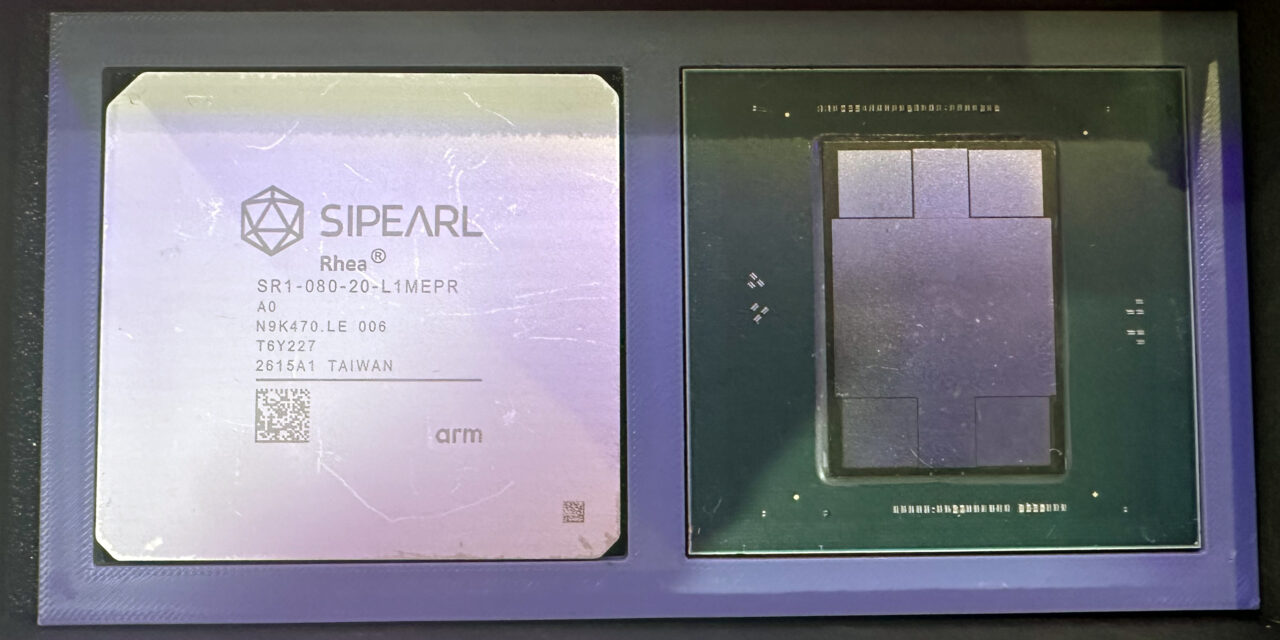
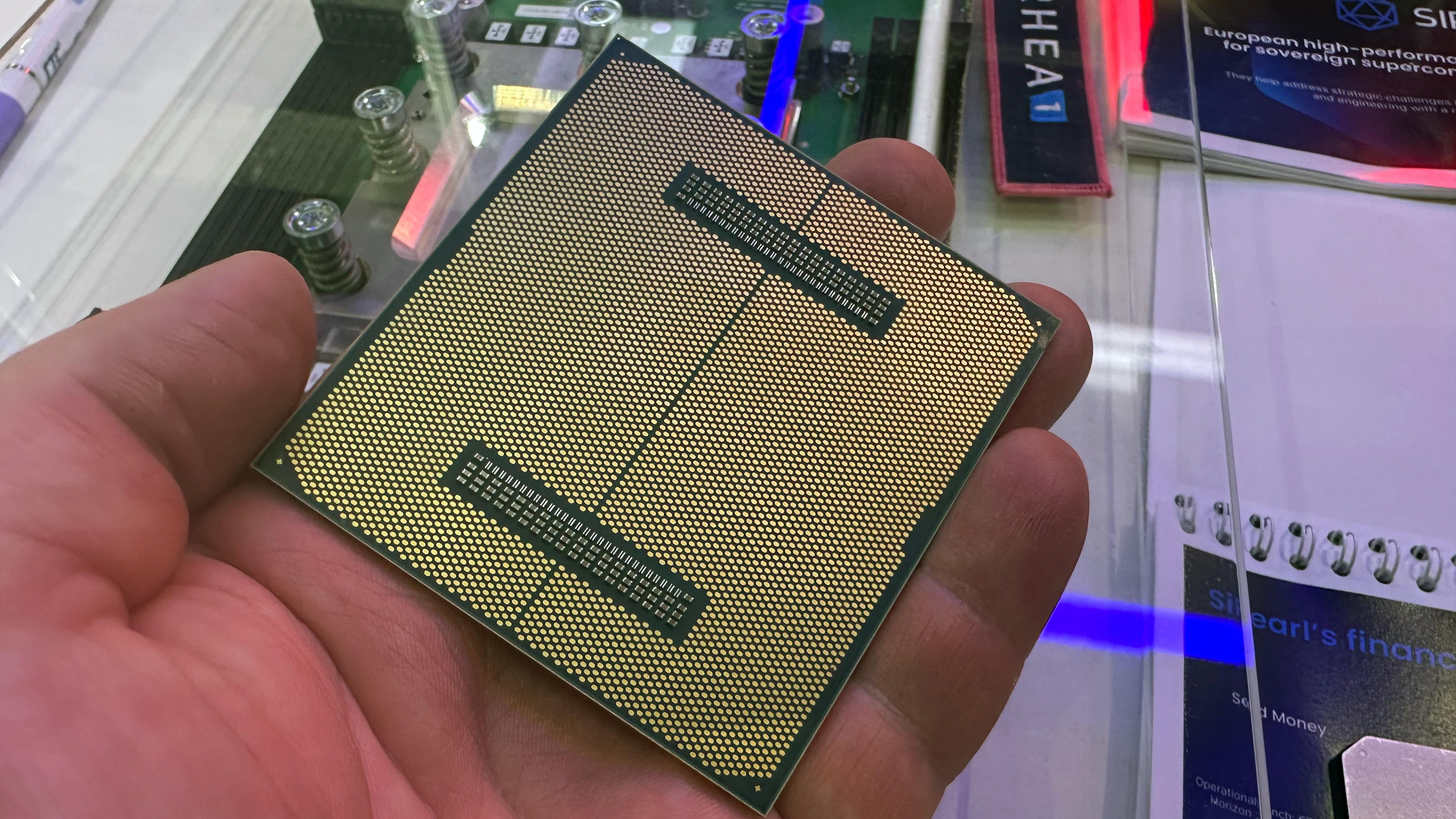
SiPearl’s Rhea (or Rhea1, how the company prefers to call the unit these days) sports 80 Arm Neoverse V1 cores with two 256-bit Scalable Vector Extension (SVE) engines for fast vector computations in FP64, FP32, BF16, and INT8 formats; 1 MB of L2 per core; 80 MB system-level cache (SLC), and 104 PCIe 5.0 lanes. The CPU has a unique memory subsystem comprising four HBM2E interfaces for 64 GB of on-package HBM2E stacks for applications that require massive memory bandwidth (think supercomputer applications like fluid dynamics) and four DDR5 interfaces supporting two 256 GB DIMMs per channel, for up to 2 TB of memory per socket. Rhea comprises 61 billion transistors and is fabbed by TSMC using its N6 process technology.
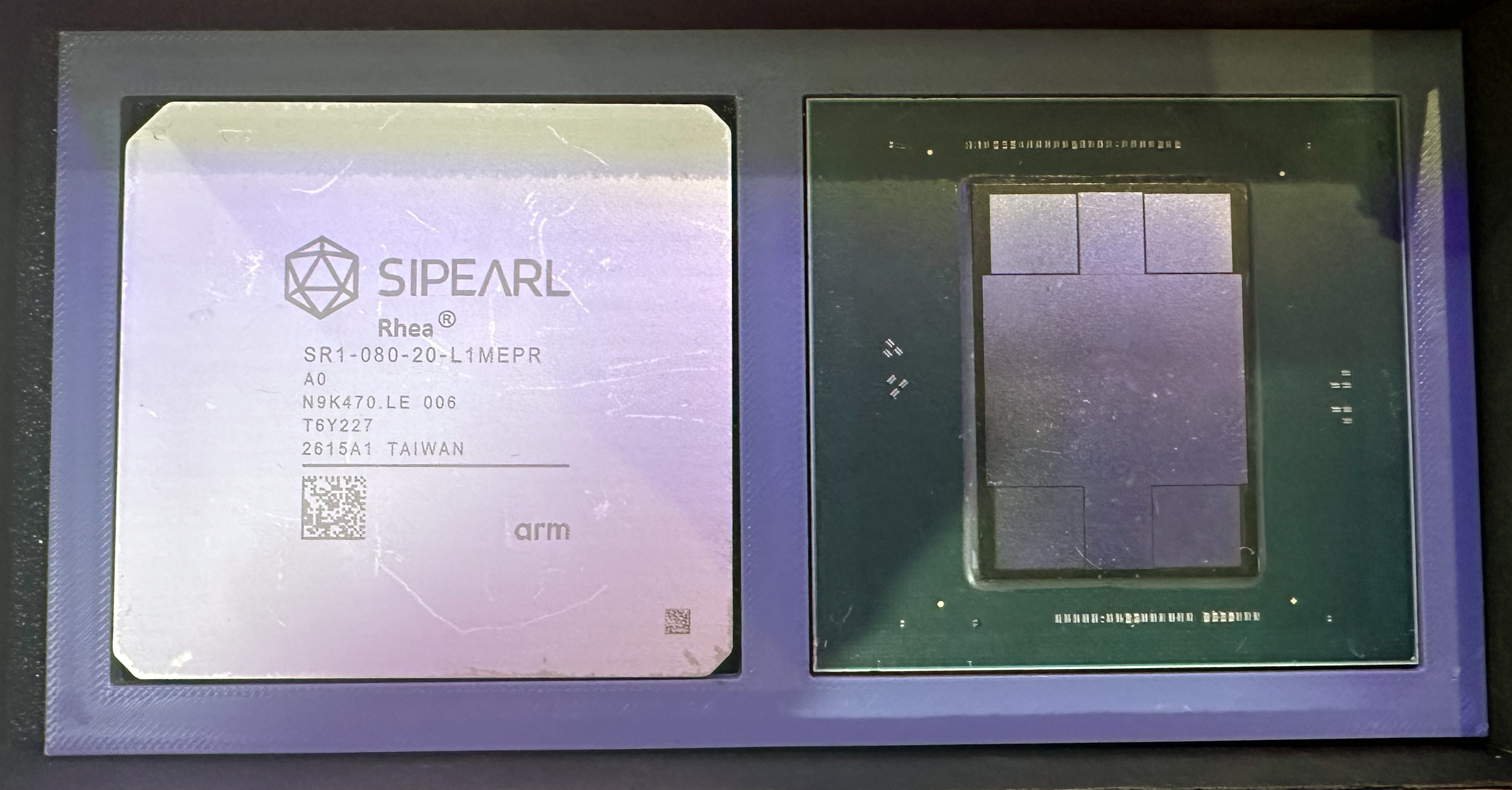
SiPearl received the first samples of its Rhea processor in mid-May, and the CPU is currently in bring-up mode. So far, it looks like the very first silicon works just fine, so the company will not have to respin it, which means SiPearl has a good chance of shipping it to customers in the coming quarters.
“The Rhea1 CPU is in its 12-week bring-up process since May 13, and it works exactly as it was designed to do,” said Craig Prunty, vice president of marketing and business development of SiPearl, in an interview with Tom’s Hardware Premium. “The test version of Rhea1 will be available for testing by partners and EU collaborative projects at the end of the bring-up process. The general availability of Rhea1 is scheduled for end of 2026.”
Getting the very first silicon to work correctly is a stroke of good luck, especially for the very first product from a startup that has never designed a complex CPU before. However, it has taken the company over five years to define and then develop its processor, an unacceptably long cycle. With Rhea, SiPearl not only built its processor, but it actually built the company, Craig Prunty admitted in an interview with Tom’s Hardware. The company once tried to work with a contract chip designer, but eventually canceled the deal and formed five in-house development teams in Europe. Since these teams have never worked together before, the processor was delayed a number of times from 2023 to 2026. It, of course, gained eight additional cores in the meantime, but this hardly justifies a three-year delay.
“We have five development teams in Europe: Maisons Laffitte, Massy (both in the Paris region), Grenoble and Sofia Antipolis in France, Barcelona in Spain,” Prunty said. “The Bologna team is currently being put together.”
One of the reasons why SiPearl has so many locations is that it wants to shrink its development cycle to around 18 months to offer competitive CPUs.
Now, because it is 2026, HBM2E memory is extremely hard to get, which is why Rhea1 will be a limited-run processor only available to select clients and partners. In theory, this is not something that is going to happen to SiPearl’s Athena processor for aerospace, defense, and government applications, which is essentially Rhea with 16, 32, 48, 64, or 80 Neoverse V1 cores and without onboard HBM2E, which will be sold based on market demand sometime in 2028. Though, do not expect Athena to have a very long lifespan. SiPearl hopes to tape out its 2nd Generation Rhea (Rhea2) processor in 2027. That CPU will not have onboard HBM, so its derivatives for aerospace, defense, and government systems will probably follow shortly, making Athena1 obsolete.
Opening unexpected doors
To a large degree, the first-generation Rhea processor is more than just a product for SiPearl, as it is meant to put the company on the map of data center and supercomputer CPUs and proof that a European entity can develop a competitive processor. SiPearl originally intended to address European supercomputers and sovereign AI infrastructure with Rhea1. However, many commercial cloud providers in Europe and the Middle East plan to evaluate the platform and even deploy it (albeit not widely) as they want to ensure they have access to technology in the current geopolitical situation.
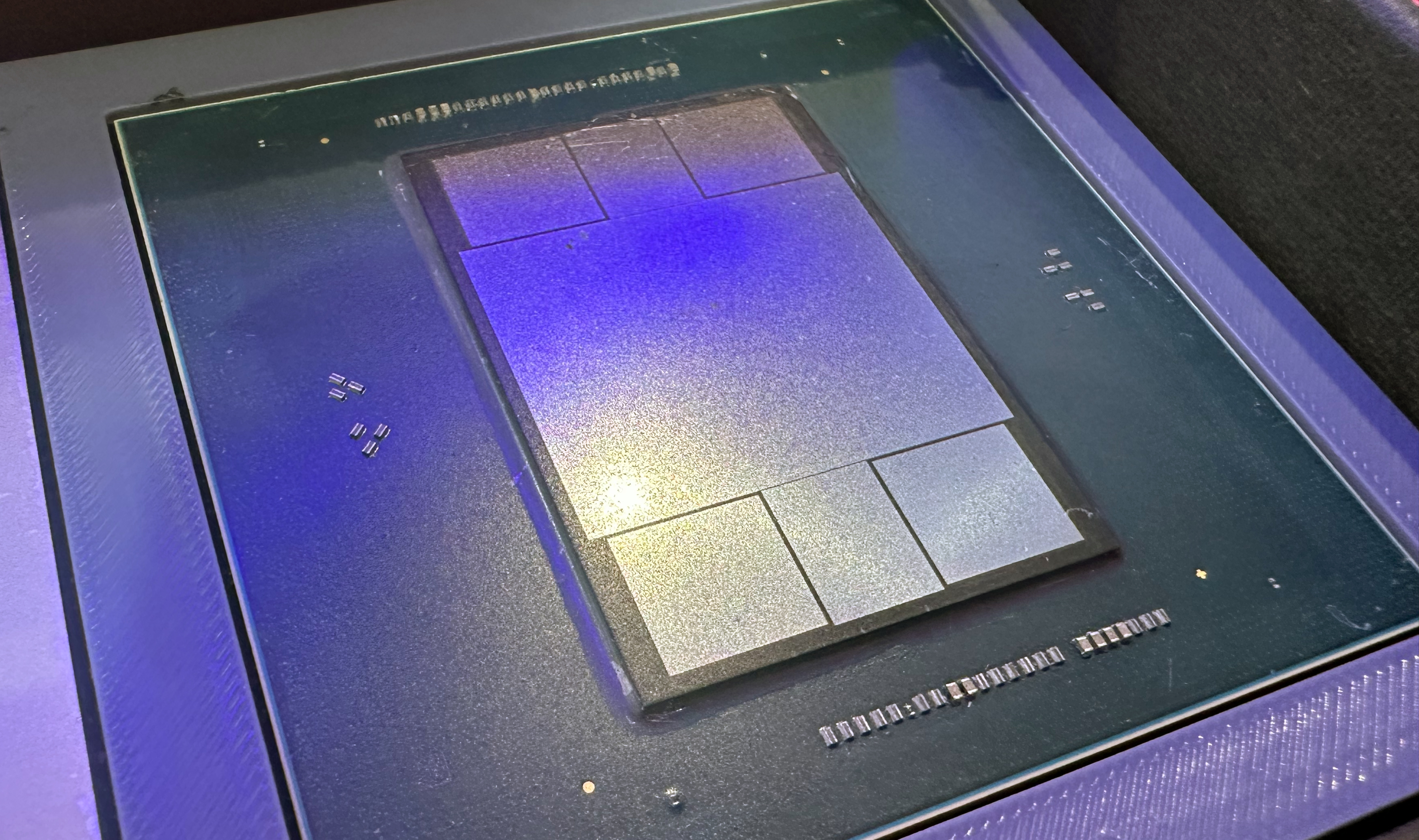
While the CPU is the industry’s third processor to use a hybrid memory subsystem comprising HBM2E and DDR5 (for which SiPearl deserves accolades), it is very late to market, so while it is natural that various sovereign AI and HPC deployments and Europe-funded supercomputers will deploy it, expecting commercial companies to deploy Neoverse V1-based machines in 2027 is pretty naïve. However, commercial companies will validate and test the platform, possibly do some software porting, and ensure that it works as intended. Some companies might even deploy Rhea1 in their data centers. As Craig Punty puts it, Rhea1 could open rather unexpected doors for SiPearl.
As it turns out, geopolitical tensions and export controls force big players to look for alternatives to American hardware, which is where SiPearl’s processors could fit rather well. SiPearl is based in France, it has R&D centers around Europe, it licenses technologies from Arm, and produces its CPUs in Taiwan. The company cannot ship its CPUs to China due to export restrictions, but it can sell them to clients in Europe and the Middle East without restraint, which is its indisputable trump card. Assuming that SiPearl offers competitive performance, its CPUs are almost guaranteed to be adopted by sovereign AI and HPC deployments in Europe, which means guaranteed revenue.
One might argue that since SiPearl uses Arm’s cores, it will inevitably compete against Arm’s AGI processors eventually. Indeed, it will, once its CPUs address large CSPs. Which is why the company must stay ahead of Arm’s own offerings in terms of performance and features, or at least be on par with them.
Seine reference server
For now, SiPearl is bringing up its Rhea1 processor in its labs. The company already has its Seine reference server design that is primarily designed for validation, testing, evaluation, and software porting. For AI and HPC deployments, Seine can be configured for one Rhea CPU and two accelerators; for more traditional supercomputer needs, two Seine motherboard can be installed into one chassis, though the nodes will work independently.
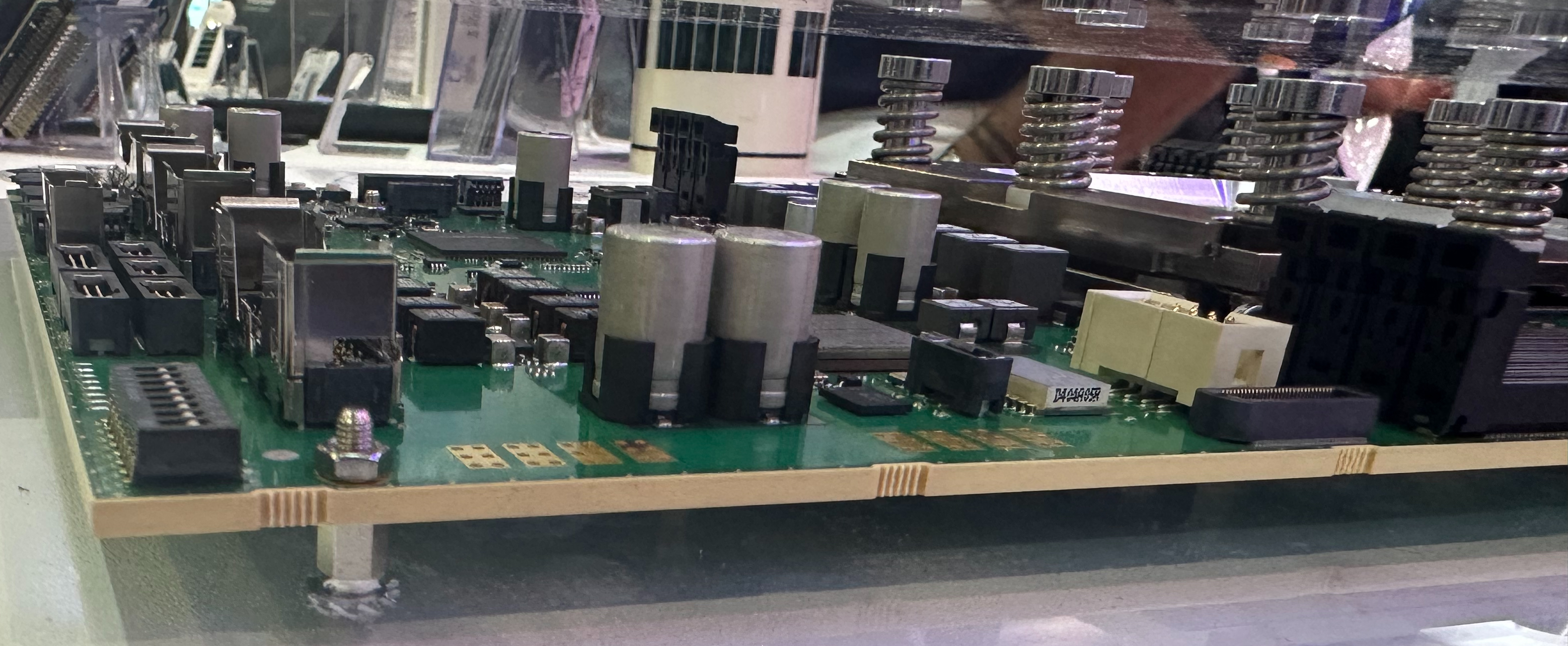
Speaking of the Seine motherboard, it should be noted that since SiPearl uses it for bringing up the CPU, it had to be made perfect so to exclude any possible problems on its side. To that end, it uses costly components and an ultra-expensive 26-layer printed circuit board to ensure signal integrity, reduce crosstalk, provide the best quality power possible, and ensure maximum mechanical stability.
The Seine server reference design will be used by Bull to build servers for the Jupiter supercomputer, according to Prunty. Other server suppliers may follow and adopt the same design to offer their servers based on Rhea1.
“We had also a partnership agreement signed with HPE to work together on European supercomputers tender offers,” Prunty said. “Our CPUs will also equip other servers as part of European AI gigafactory project.”
Sipearl’s Rhea readies up
Developing a supercomputer-grade processor in Europe is already quite an achievement, but developing a CPU that works fine from the first silicon could indeed be considered a breakthrough for a startup. In addition, SiPearl tapes out its Rhea in a good time when potential customers may adopt it despite the fact that Neoverse V1 technology that powers the chip is outdated. As it turns out, export controls made not only sovereign AI and HPC deployments look in SiPearl’s direction, but private CSPs in Europe and the Middle East also plan to evaluate its processors.
SiPearl admits that a five-year development cycle is too long for a modern CPU, though it remains to be seen whether it can indeed shrink it to 18 months. The company already has five development sites and is building another one, so it looks like it the company is on the right path. Yet, SiPearl must prove that it can develop Arm-based processors that are competitive against Arm’s own AGI as well as other Arm-powered data center CPUs, something that will not be easy to do given the fact that SiPearl is a startup, whereas its potential rivals are billion-dollar companies.
Of course, SiPearl will always have a couple of trumps up its sleeve: the European Processor Initiative (EPI) as well as sovereign AI and HPC deployments that will always prefer locally developed CPUs no matter what. Whether such businesses are enough to build a world-class processor developer is something that remains to be seen, but at the very least, SiPearl will not vanish into oblivion like many other European CPUs makers.