
1666: Amsterdam – Hands-On With The Assassin’s Creed Creator’s Long-Awaited Passion Project
Platform:
PC
Publisher:
Panache Digital Games
Developer:
Panache Digital Games
Assassin’s Creed creator Patrice Désilets has moved mountains to bring his passion project 1666: Amsterdam to fruition. The witchcraft-focused action-adventure game was originally conceived over 15 years ago while Désilets was still at Ubisoft. Through a series of tumultuous events, the project has changed studios and been at the center of a years-long lawsuit over rights ownership between Ubisoft and Désilets.
Now that 1666: Amsterdam will finally see the light of day, I traveled overseas to its namesake city to play an hour-long build Panache Digital Games prepared for media, which I do at the Amsterdam Dungeon, a local horror attraction that’s part Universal Halloween Horror Nights, part history lesson. Amid the muffled screams of guests enduring the dungeon’s creepy rooms and spirited live performers, it creates the perfect atmosphere to dive into Panache’s occult adventure.

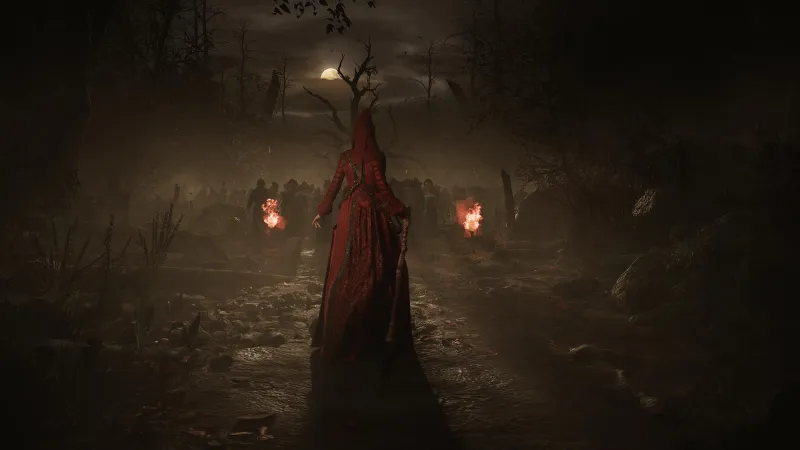
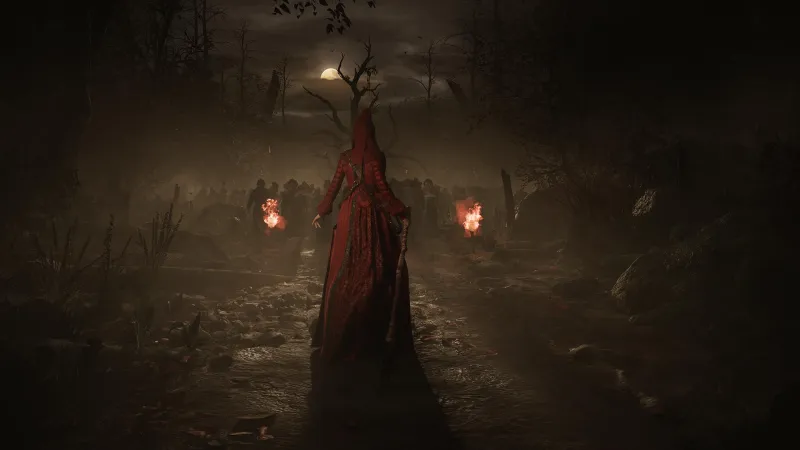
The demo begins immediately after the free prologue chapter that launched alongside the game’s re-reveal at Summer Game Fest. I control Noa Brooklyn, a young crimson-clad witch who has just completed her initiation into the Zaindaris, a magical faction that raised her to become a Collector. Noa’s primary purpose is to identify and eliminate entities called Originals, powerful beings who can assume human form to live amongst us, sometimes for centuries. The Zaindaris granted the Originals their power long ago by bestowing Nux, an ancient magic, upon chosen individuals in an attempt to elevate humanity; instead, the Nux corrupted many of them over time, and they now pose a danger to the world. The Zaindaris have since been engaged in a generations-long cycle of training a Collector to reclaim the Originals’ power to restore balance. Now, it’s Noa’s turn.
Noa’s journey won’t be the only time period players will experience. In a fitting twist from the mind behind Assassin’s Creed, the game prominently features a more contemporary setting. It’s New Year’s Eve in 1999, and a young man named Aaron visits Amsterdam with his lover. Turns out his partner is secretly a Zaindaris. They engage in a sex ritual that somehow transports Aaron’s consciousness to 1666, where he awakens in the body of a cat during the night of Noa’s ritual; Noa chooses him as her familiar, or Union Cat. This begins a fascinating partnership between the steadfast Noa and reluctant Aaron as they must work to help one another. But there’s one more era at play.
If you played the prologue, you met a woman named Clio, seemingly in the 2020s, investigating a letter from her father. Clio’s dad, it turns out, is Aaron, and his message recounting his and Noa’s adventure serves as the narration. Clio’s full role in 1666: Amsterdam is unclear, but given she was evidently conceived during the ritual that kicks off the game’s events, it’s clearly important.
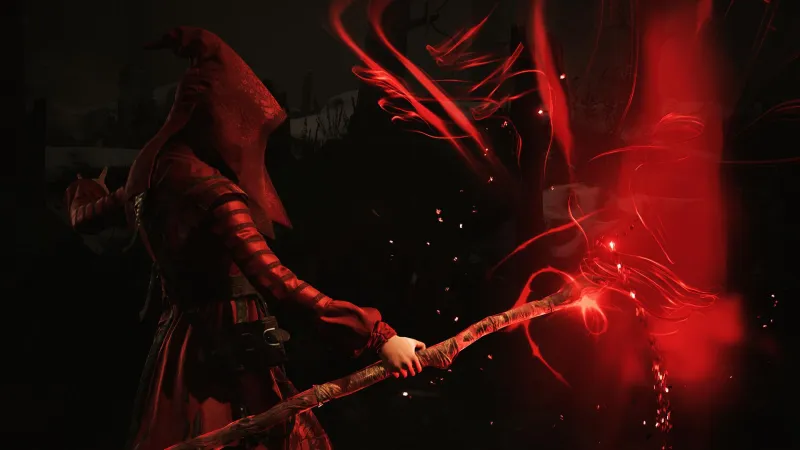
After completing the ritual, the gathering is interrupted by witch-hunting militia. Chaos ensues, giving me the first sample of combat. The right shoulder trigger unleashes a basic combo attack, with Noa pummeling foes using her staff. Stunning them at the brink of death triggers a flashy final blow. A dodge allows Noa to evade attacks from the often four or five enemies surrounding her, and she consumes potions to heal. The melee combat doesn’t pack much satisfying impact in this in-development build, but it gets the point across. The enemies also tend to take turns attacking, which feels disappointingly dated and reminds me of dealing with mobs in the early Assassin’s Creed games. Defeating a group paves the way for another mob to take their place, with dramatic camera zooms displaying their shouts such as “Don’t move” and “Blaggard.” It’s a stylish touch, but one I grew tired of after consecutive encounters. I’d rather they just take their lickings without the prerequisite introduction.
The only magic attack at my disposal lets me blow up objects such as barrels and crates. This proves much more satisfying, and can instantly kill or heavily damage nearby targets. However, Désilets later reveals in a separate hands-off demo other abilities Noa will gain. For example, she can unleash tendrils that ensnare and suspend foes, and temporarily petrify enemies, among other powers. Gathering Nux energy allows Noa to perform these feats, and they look fun to pull off.
Noa also commands traversal abilities, such as the power to glide over water and warp across platforms to quickly get around a freely explorable Amsterdam that, while large, is denser than wide. This scale is partly due to Panache being a smaller team – 70 employees strong – and its goal of ensuring that every building has explorable interiors. This design choice plays into another key part of 1666: Amsterdam: investigating Originals. Finding them involves unearthing clues such as notes (often by scavenging homes and businesses), analyzing your surroundings for helpful details, and speaking with citizens to glean the required information: their appearance, seal, and original name. Investigations occur during the day. Once night falls, it’s time to confront the Original.
Another surprise is that missions have a roguelike element. After accepting a contract to hunt an Original, players choose one of three powers from a randomized pool. These can be stat buffs such as increased health or offensive powers like the aforementioned Petrify. Panache gives players the freedom to investigate Originals as they see fit, with many avenues for gathering information discreetly or more chaotically. Sadly, I only get to watch Désilets tackle a full investigation, but finding clever ways to track down Originals looks to be the bulk of 1666: Amsterdam’s gameplay. I hope it’s fleshed out well enough to remain consistently engaging.
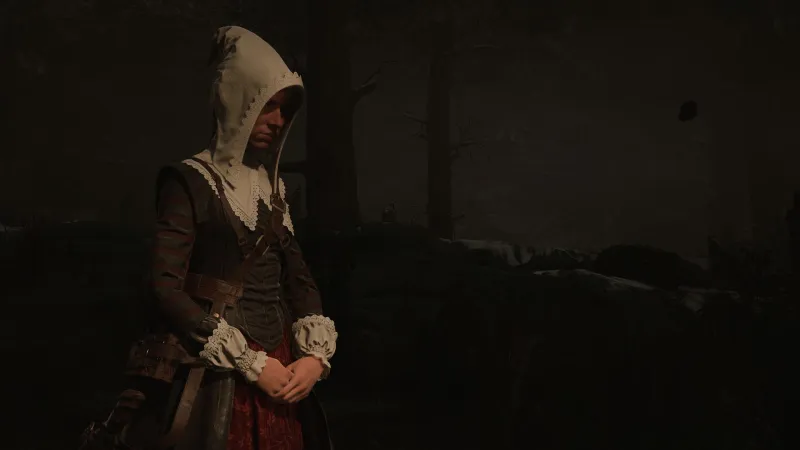
To explore more safely, Noa can freely shift between her witch and civilian appearances. The latter draws less attention and makes citizens more amenable towards you. This matters, as an attention meter builds whenever you do questionable things, such as peeking through windows in front of others or openly performing magical acts. A filled meter invites the full wrath of the militia, forcing you to either fight your way to safety or flee to one of many safehouses Noa can retreat to in order to extinguish the heat. These safehouses also allow her to craft potions using recipes and ingredients found by searching through spaces. If the militia defeats Noa, she’ll be sent to prison, where you’ll have to escape. However, Panache is still figuring out this particular element and how severely it will punish multiple incarcerations.
As for Noa’s partner Aaron, you can switch control to him at any time. As a cat, he can access places Noa can’t. Panache has created buildings that can be accessed in multiple ways. Aaron can leap up and around buildings to enter them, bypassing locked doors and opening them for Noa. Like everything else in this shaky development build, platforming was rough and occasionally unresponsive, but it reminded me of Stray’s deliberate yet graceful traversal.
Aaron can also distract certain guards eager to pet him. On the flip side, those fearful of black cats are vulnerable to possession. Approaching a frightened person and hitting R2 unleashes a hiss, followed by a timed minigame where Aaron pounces upon them and scratches their face. This act allows Aaron to hijack their bodies, useful for exploring and letting Noa into restricted spaces. Aaron can also transmute Lux into Nux. I enjoyed the dynamic of switching between Noa and Aaron to figure out how to combine their unique talents to access tricky locations.

The game’s digital Amsterdam is impressively realized. Panache’s environmental level and art direction draw inspiration from 17th-century Dutch painter Johannes Vermeer (historically living during the game’s timeframe), famed for specializing in domestic interior scenes capturing everyday life of the period. 1666: Amsterdam’s visual presentation has a painterly flourish that adds flair to the 3D models.
When 1666: Amsterdam becomes available in Early Access on August 25, players can only explore the game’s early chapters, but Désilets calls it a “pretty big chunk” of content. He confirms that the game’s story outline, lore, and rules are complete, with Panache polishing and expanding dialogue and gameplay mechanics. Désilets emphasizes Panache’s eagerness to build the game with the community, and says to expect it to remain in Early Access for at least one year. As a self-professed “old timer,” Désilets recalls the days when a game printed to disc was complete and unchanging, flaws and all. He’s excited for players to witness 1666: Amsterdam’s development and, hopefully, provide valuable feedback. Désilets also confirms the game’s reported AI placeholder assets have been removed and no such content is present in the Early Access launch.
My demo of 1666: Amsterdam was, as expected, rough around the edges, as an in-development build of a game launching in Early Access. The experience didn’t wow me from a polish standpoint, and I worry if the game will at least feel more stable and fun to play than the build I played when it arrives in a couple of weeks. But there are exciting gameplay and narrative ideas at play with Désilets leaning on some concepts from Assassin’s Creed but reworking them under a cool witchcraft premise. After over a decade of waiting and uncertainty, it’s tough not to feel happy for Désilets and even inspired by his persistence to will 1666: Amsterdam into existence. The project has a long road ahead, and although it could be off to a rocky start, here’s hoping it can eventually realize its enchanting potential.