
Budget smartphone market collapses under the weight of memory shortages, sales expected to drop 22% — memory alone now comprises up to 64% of the total cost of lower-tier smartphones
After ravaging the PC market for both DIY builders and OEM buyers, wrecking the game console ecosystem, and savaging the enterprise server landscape, the global memory shortage is officially claiming its next victim: the budget smartphone. According to new market analysis from tech research firm Omdia, the smartphone market, particularly the entry-level market, is on the brink of a massive contraction. Omdia projects that global shipments of smartphones priced below $400 will plummet by over 22% this year, dragging the entire global smartphone market down by 12% year-over-year. The culprit? Skyrocketing contract prices for DRAM and NAND flash memory, which have turned the razor-thin margins of budget phone manufacturing into an impossible financial math problem, especially given that memory alone now comprises up to 64% of the total cost of lower-tier smartphones.
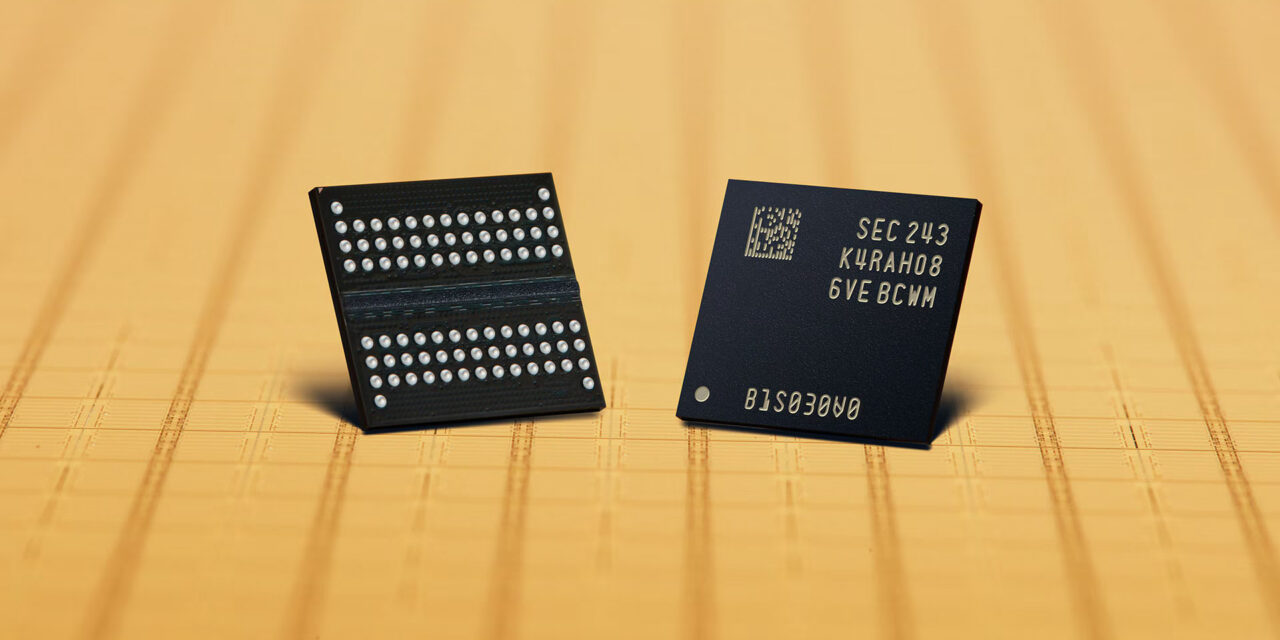
To understand why cheap phones are vanishing, you have to look at the Bill of Materials (BOM). That’s the raw physical cost to manufacture a device. In the tech industry, this is governed by the “cost floor.” Even if a manufacturer puts a low-capacity memory chip into a phone, the baseline cost to produce, test, and package that silicon has skyrocketed over the past four quarters because memory giants like SK hynix, Samsung, and Micron have aggressively redirected their manufacturing wafer starts away from standard commodity memory and toward High Bandwidth Memory (HBM) to feed the insatiable, high-margin demand of AI data centers. Commodity smartphone memory is effectively being starved out of existence.
Omdia’s latest Quarterly Smartphone Technology Trends report reveals just how destructive this conversion has been to phone BOMs. Between Q3 2025 and Q1 2026, the share of manufacturing costs dedicated to memory nearly doubled for sub-$400 devices, where memory chips now account for nearly 60% of the total physical manufacturing cost. In the sub-$99 ultra-budget phones, memory has apparently breached a staggering 64% of the entire BOM budget. When two-thirds of a budget phone’s manufacturing cost is tied up in RAM and storage chips, there is simply no money left to pay for the processor, screen, battery, camera sensors, or chassis.
In normal market cycles, handset makers offset expensive components by trimming costs elsewhere, but entry-level devices are already stripped to the bone. Budget champions, including Chinese value brands like Xiaomi (Redmi/POCO), OPPO, Vivo, and Transsion (Tecno and Infinix), have zero structural wiggle room left. As Omdia principal analyst Zaker Li notes, manufacturers are being forced to significantly raise retail prices on low-end models just to maintain microscopic profit margins.
The problem is, entry-level consumers are notoriously price-sensitive; when a $150 phone suddenly costs $220, demand evaporates. Facing unviable economics and weakening buyer demand, smartphone vendors are quietly initiating a tactical retreat from the bottom of the market, scaling back or entirely abandoning low-end handsets to focus on more lucrative price brackets.
Now, while the sub-$400 market collapses, Omdia predicts that smartphones priced above $400 will actually prove resilient, growing by 5.7% this year. However, surviving in this higher bracket requires intense component gymnastics. To keep devices like mid-range “flagship killers” affordable without taking a massive hit on memory costs, manufacturers are quietly downgrading other hardware. Chinese vendors are stepping back from advanced LTPO OLED screens in favor of older LTPS OLED panels on sub-premium models, scraping together $3 to $5 in savings per unit. Because the SoC remains the single largest cost expense in phones over $600, builders are reusing previous-generation processors to slash chip costs by 30% to 40%. Finally, Omdia says to expect mid-range phones to drop redundant macro or ultra-wide lenses entirely, or potentially to revert to smaller image sensors.

True top-tier flagships like the iPhone 17 Pro or Galaxy S26 Ultra are mechanically immune to these compromises. Because their total BOM includes expensive titanium frames, custom silicon, and periscope cameras, memory makes up a much smaller percentage of their overall build cost. However, they aren’t immune to the broader economics: premium buyers are simply being handed the bill directly. With memory costs up sharply across the board, industry-wide retail price hikes on high-end hardware are already becoming the new normal.
If you’re waiting for phone prices to drop back to Earth, you’ll need to be patient. There is relief on the horizon, but it won’t arrive in time to save this year’s buying cycle. Recognizing that the memory bottleneck is now a threat to the broader tech economy, memory vendors and government regulators are throwing unprecedented billions at the problem. In a historic public-private initiative, the South Korean government recently unveiled an $870 billion (1,350 trillion won) 10-year investment framework with Samsung and SK hynix. The aggressive plan includes breaking ground on multiple mega-fabs in Yongin and Cheongju, with the explicit government-mandated goal of doubling national memory output within five years. Meanwhile, SK hynix is fast-tracking advanced packaging and NAND facilities, and Micron is heavily building out its leading-edge DRAM campuses in the U.S. and Japan.
The problem is, semiconductor fabrication plants take years to build, equip, and scale. Most analysts agree that meaningful, high-volume memory relief won’t realistically hit consumer supply chains until mid-2027 at the earliest, with full normalization stretching into 2028 or later. Until we see a major market realignment (or failing that, until those mega-fabs come online), the RAMaggedon will continue to dictate what handsets you can buy in the smartphone aisle.