

ExpressVPN vs. NordVPN: Clash of the heavyweight titans
It’s a heavyweight matchup between the two VPN giants: ExpressVPN vs. NordVPN. They are the Godzilla vs. Kong, Gates vs. Jobs, or Packers vs. Bears of the VPN world. Both offer some of the fastest, most secure, feature-rich services on the market. So which should you choose?
NordVPN might have cheaper long-term plans and it offers more servers, but ExpressVPN has a better privacy record and more consistent access to streaming services. While both are neck and neck, I recommend NordVPN for most folks. It’s our pick for best VPN overall due to its unrivaled feature set, blazing-fast speeds, and excellent streaming support. That’s not to take anything away from ExpressVPN which is also an exemplary choice. The differences are nuanced so let’s break it all down in more detail below to help you choose the best VPN for your own needs.
ExpressVPN vs. NordVPN: Features compared
| ExpressVPN | NordVPN | |
| Server network | Number of servers is unknown, 113 country locations | 9,100+ servers, 149 country locations |
| Simultaneous connections | Up to 14 | 10 |
| Average speeds | 70% of base download, 80% of base upload | 75% of base download, 81% of base upload |
| Protocols | OpenVPN, IKEv2, Lightway, Lightway Turbo | WireGuard (NordLynx), NordWhisper, OpenVPN, IKEv2/IPsec |
| Available platforms | Windows, MacOS, Android, iOS, iPadOS, Fire TV, Apple TV, Linus, Browsers, Routers | Windows, MacOS, Android, iOS, iPadOS, Fire TV, Apple TV, Linus, Browsers, Routers |
| Business location | British Virgin Islands | Panama |
| Cost (base price only) | $12.99 per month, $74.85 for the first year, or $97.72 for the first two years | $14.99 monthly; $65.88 for the first year; $94.23 for the first two years |
Best for speed: NordVPN
In my testing, both NordVPN and ExpressVPN ranked with stellar speed scores. Along with Hotspot Shield they’re the fastest VPNs available. While all VPNs will slow down your internet speeds to some degree, these two slow it down the least.
In my latest tests, ExpressVPN resulted in an average of 70 percent of the base internet speed for downloads and 80 percent of the base for uploads—with a slight bump on most servers if you utilize the Lightway Turbo protocol. NordVPN nosed it out though with 75 percent of the base download speeds and 81 percent of the base upload speeds. Those are pretty close margins and you likely won’t see much of a difference in your everyday usage. For what it’s worth though, NordVPN has consistently had the fastest speeds of any VPN for a few years running now.
Whichever you choose, you can expect to handle bandwidth-heavy tasks, such as gaming and 4K streaming, with ease. However, the winner for speed—by the slimmest of margins—is NordVPN.
Best for cost: ExpressVPN
ExpressVPN used to have only one subscription tier for the longest time. That’s all changed thanks to the overhaul of its pricing model in 2025. Now, ExpressVPN offers three subscription tiers: Basic, Advanced, and Pro. The Basic plan gives you access to the VPN with 10 simultaneous connections and ad-blocking. A Basic subscription costs $14.99 per month, $74.85 for one year, or $83.72 for a two-year plan.
Advanced adds two extra connections, tracker-blocking, a password manager, and three days of eSIM service. An Advanced subscription costs $16.99 per month, $89.85 for one year, or $125.72 for a two-year plan.
The Pro plan adds another two connections, bringing the total to 14, along with five days of eSIM service and access to your own dedicated IP. A Pro subscription costs $22.99 per month, $134.85 for one year, or $209.72 for a two-year plan. Both the Advanced and Pro two-year plans also include four extra months for free.
NordVPN, on the other hand, offers three subscription tiers: Basic, Complete, and Prime. The Basic plan provides 10 simultaneous connections, access to the VPN, protection against malicious domains, and Dark Web Monitor. It costs $14.99 per month, $65.88 for one year, or $94.23 for two years.
The Complete plan adds antivirus protection, an ad- and tracker-blocker, scam-call protection, Dark Web Monitor Pro, a password manager, and 1TB of encrypted cloud storage. It costs $19.99 per month, $77.88 for one year, or $121.23 for two years.
Finally, Nord’s Prime plan adds identity protection, credit monitoring, identity-theft insurance, and cyber-extortion coverage. It will set you back $29.99 per month, $113.88 for one year, or $202.23 for two years. The identity-theft and cyber-extortion benefits are currently limited to U.S. residents. NordVPN’s two-year plans also include three extra months.
While NordVPN offers lower introductory prices for its one- and two-year Basic plans, ExpressVPN has the cheaper monthly subscription and much lower renewal rates. ExpressVPN Basic renews at $99.95 per year, while NordVPN Basic renews at $139.08 per year. Nord provides the better upfront deal for a one-year subscription, but Express offers better value over the long term. Ultimately, price will depend on how long you intend to use a VPN, but since ExpressVPN is more affordable long-term I’m giving it the slight edge here.
Best for privacy and security: ExpressVPN for privacy, NordVPN for security
Both ExpressVPN and NordVPN are industry leaders when it comes to comprehensive and innovative security features. These services now do much more than simply anonymize your internet connection, offering a range of extras such as ad- and tracker-blocking, password managers, and more.
If this category came down to the sheer number of features, NordVPN would win. It offers Double VPN, Onion Over VPN, and Meshnet, none of which have direct equivalents in ExpressVPN. Its higher-tier plans also include next-gen antivirus, an AI-powered Link Checker, scam call and message protection, and Dark Web Monitor Pro. P2P traffic is supported across all standard servers, while an optional dedicated server provides a static IP address and port forwarding.
This sounds impressive, but there are some caveats. Many of NordVPN’s best security tools require a more expensive subscription or only work on certain platforms. Its full antivirus protection is limited to Windows and macOS, for example, while split tunneling isn’t available on macOS or iOS.
But many would argue that a VPN’s main job is to protect your privacy and earn your trust—something I wholeheartedly agree with. On that front, ExpressVPN has the better record for privacy and transparency. NordVPN has now completed six independent no-logs audits, but ExpressVPN has undergone more than 20 independent security and privacy audits covering different areas of its service—three times as many.
mentioned in this article
ExpressVPN
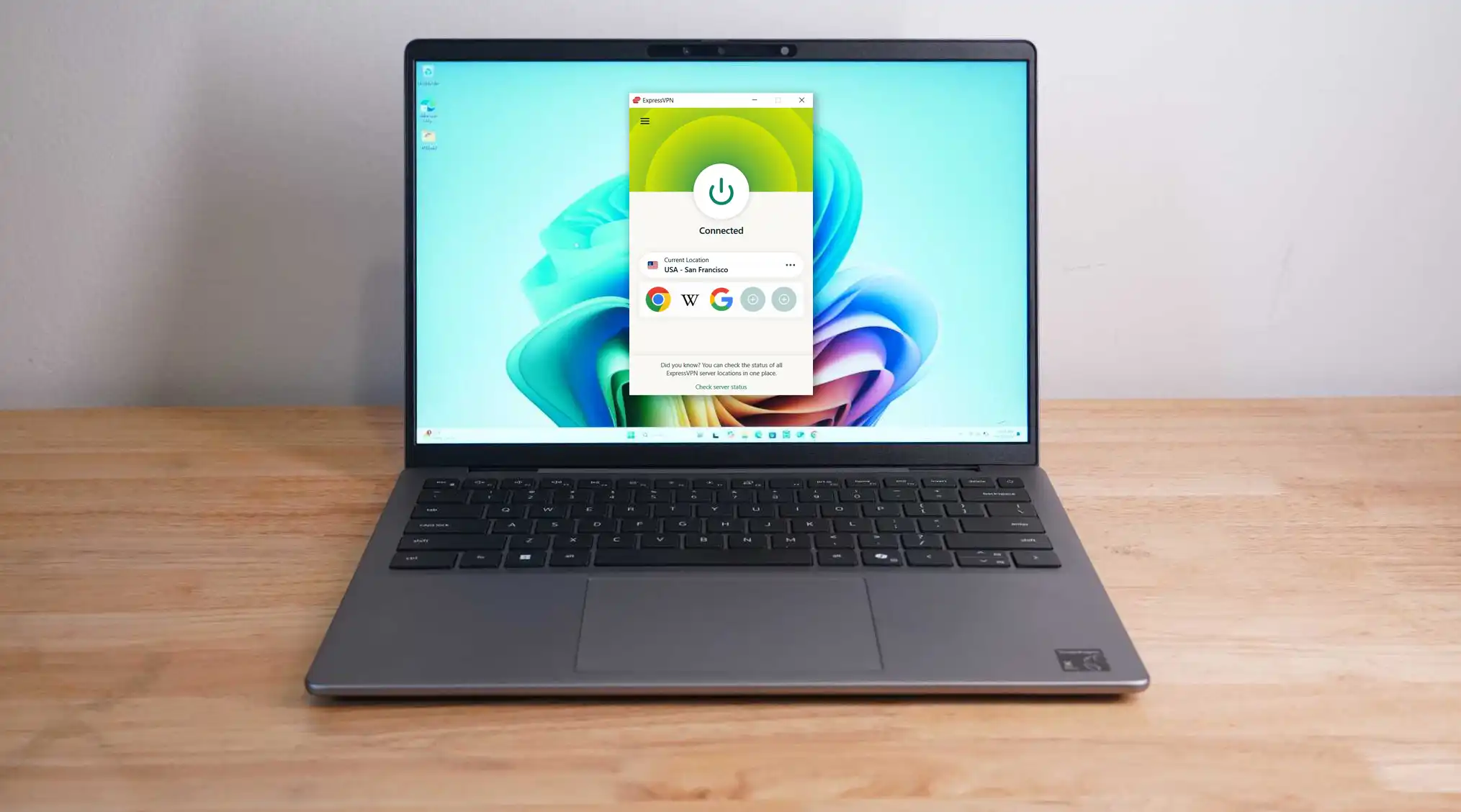

Read our review
Best Prices Today:
2,49 € at Express VPN
Both companies also publish regularly updated transparency reports on their websites. ExpressVPN began doing so slightly earlier, however, and its reports provide more detail than NordVPN’s.
Both services use strong encryption and RAM-only servers, which wipe all stored data whenever they reboot. ExpressVPN goes a step further with its TrustedServer technology. Every reboot reloads the entire software stack, including the operating system, helping prevent bugs and inconsistencies that could create vulnerabilities.
The two services are also preparing for future threats from quantum computing. ExpressVPN now offers post-quantum protection with WireGuard across its apps, while NordVPN supports it through NordLynx on most platforms. This technology helps defend against “harvest now, decrypt later” attacks, in which bad actors collect encrypted data today in hopes of decoding it once quantum computers become powerful enough.
ExpressVPN also includes ShuffleIP, a built-in feature that changes your IP address for each website you visit. This provides a little extra anonymity and makes it harder for sites to track you. NordVPN currently offers no direct equivalent.
NordVPN offers a much larger collection of security tools giving it the nod in security, but ExpressVPN’s stronger record on transparency and privacy gives it the edge for those who are most concerned with privacy.
Best for streaming: Tie
VPNs are mainly used for privacy and security, but they can also be used for entertainment purposes by unblocking geo-restricted content. Whether you’re traveling or just want to access region-locked content using a VPN to spoof your location is a great way to watch all of the content you want no matter your physical location—looking at you, Netflix England’s entire selection of Ghibli movies.
In my testing, both ExpressVPN and NordVPN came through with flying colors when attempting to access streaming services in different locations. They successfully unblocked Netflix, HBO Max, Hulu, Disney Plus, Amazon Prime, and a handful of other services as well.
The differences in streaming performance are so minimal that I can’t even nitpick to justify a winner in this category. As for streaming, it’s a tie between these two services. Both are perfectly capable at unblocking content on every major streaming site and either will serve you well if this is your goal.
ExpressVPN vs. NordVPN: Bottom line
Best VPN Overall
NordVPN
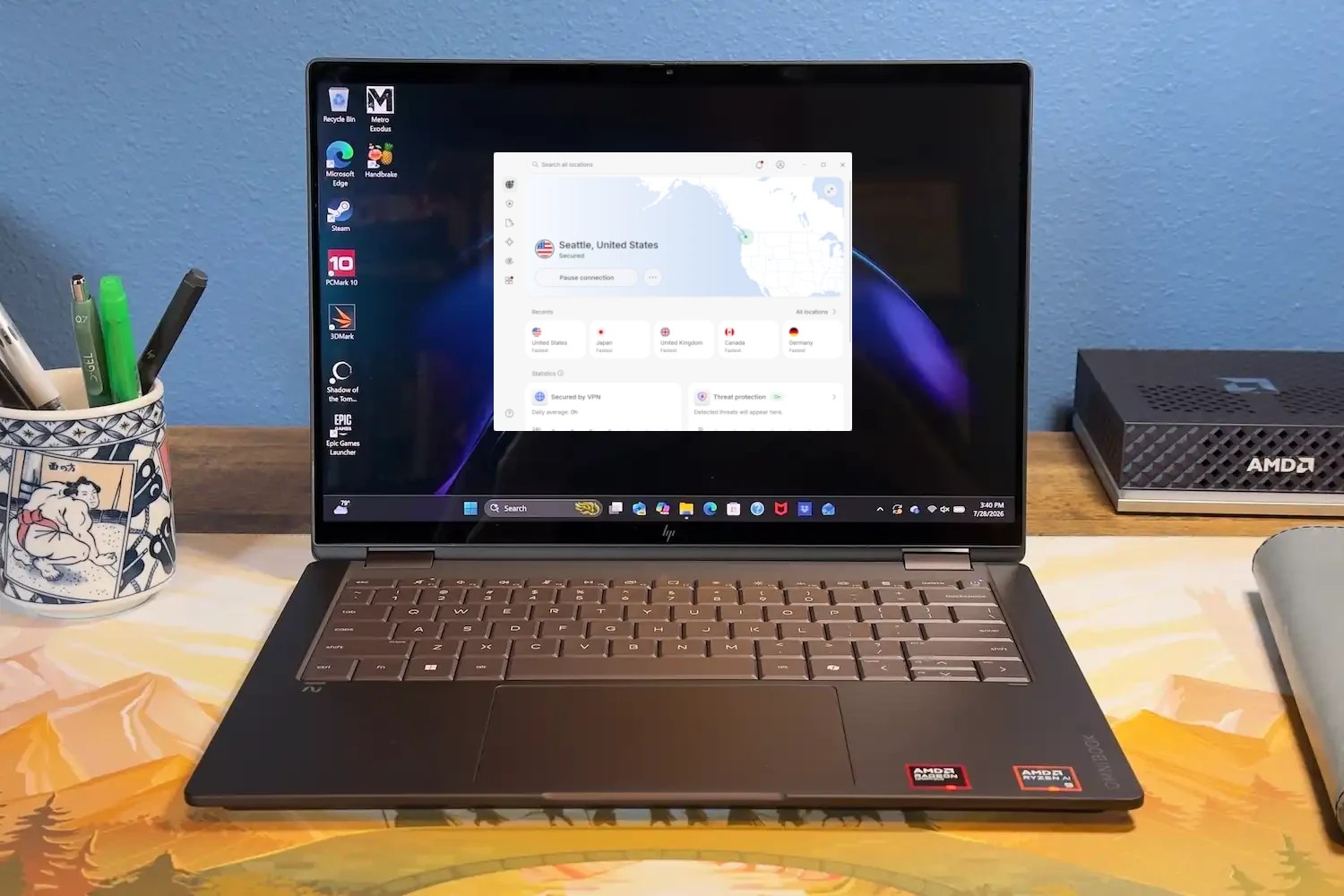
Read our review
Best Prices Today:
3,89 € at NordVPN
You can’t really go wrong with either of these VPNs. I gave both NordVPN and ExpressVPN 4.5 out of 5 stars in their respective reviews and both garnered Editor’s Choice awards for their outstanding offerings and value. That being said, NordVPN is our pick for best VPN overall and for good reason: It provides excellent security features, unrivaled speeds, terrific streaming capabilities, and great customization options.
ExpressVPN does have a sterling privacy track record and a really clean and easy-to-use interface. But Nord offers rock-solid privacy as well and with a little bit of time, anyone can use the app comfortably.
Overall, if speed and extra features are your jam then Nord is an easy choice. If ease-of-use and transparency are more important to you then consider ExpressVPN. Still, at the end of the day, whenever someone asks me for a VPN recommendation I usually default to NordVPN first.
Get NordVPN
Get ExpressVPN
Related content
- VPNs and the law: How often does law enforcement actually request VPN logs?
- Don’t commit to a VPN that lacks these 6 important features
- Here’s why you need a VPN with in-flight Wi-Fi
- NordVPN vs. Proton VPN
- NordVPN vs. Surfshark