
Qualcomm retracts select Snapdragon C power efficiency benchmarks nearly a week after publication — updated slide removes idle apps and web browsing results
Qualcomm has updated its benchmark slides for the new Snapdragon C chip targeting laptops as inexpensive as $300. Nearly a week after the company originally revealed the Snapdragon C’s specs and performance, it reached out asking Tom’s Hardware (and presumably other publications) to replace a slide with Qualcomm’s power efficiency benchmarks with an updated slide, which now includes two fewer results.
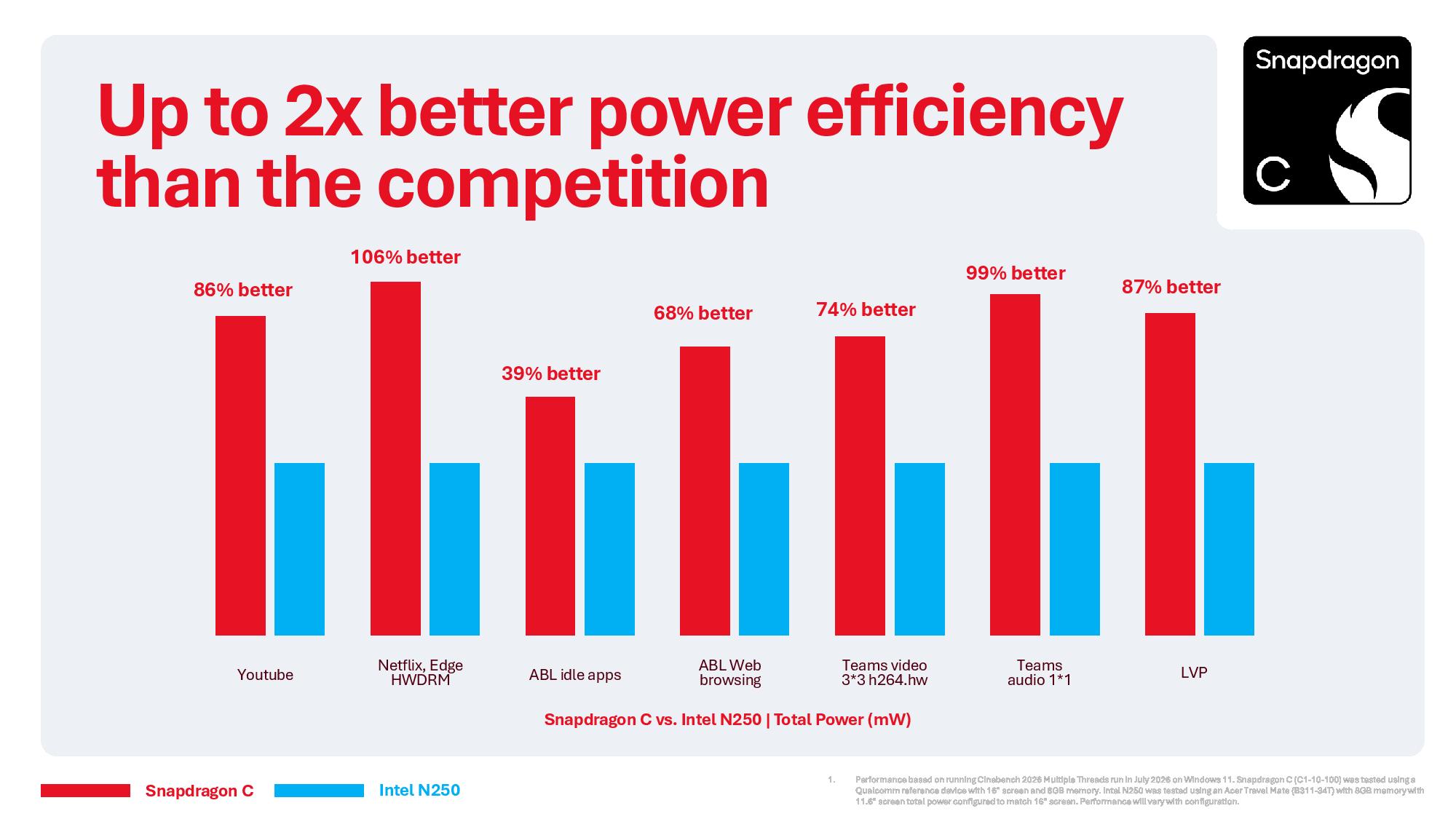
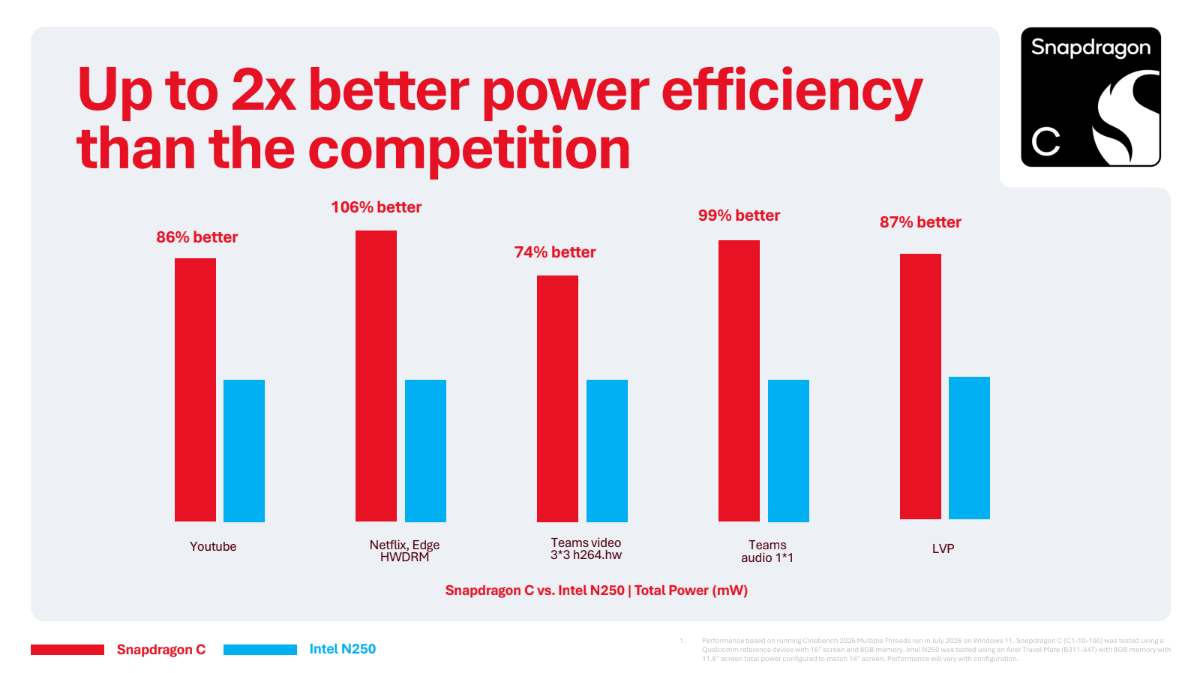
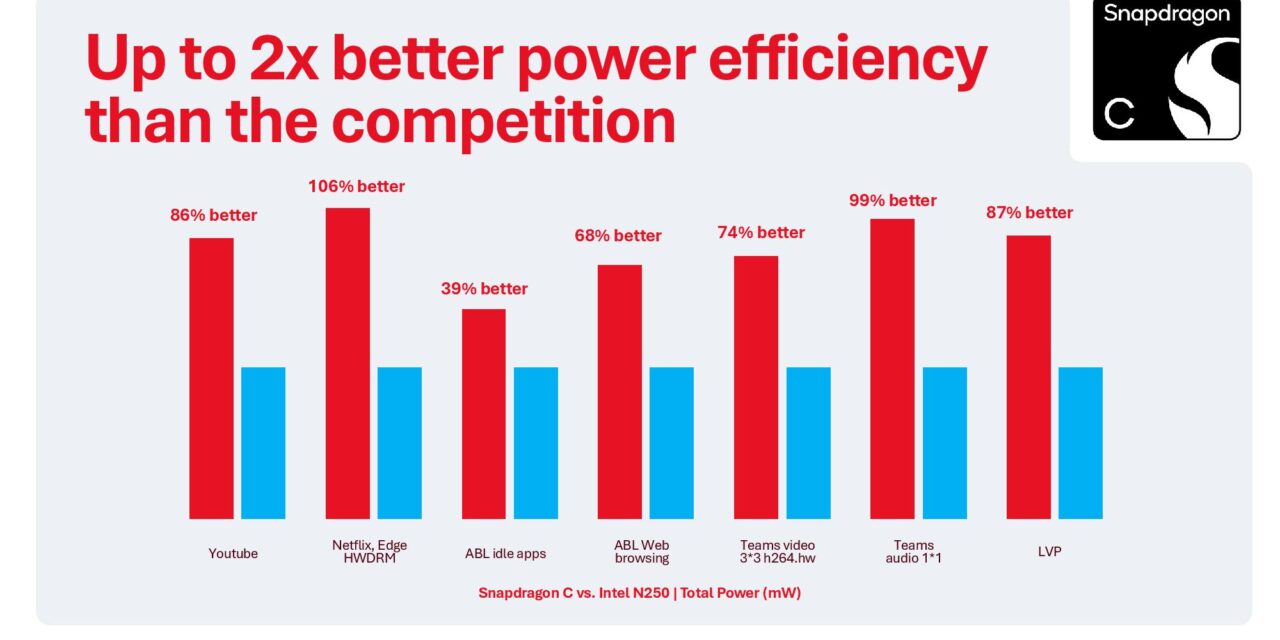
You can see the old slide and updated slide in the gallery above. The results are the same between them. However, the updated slide removes the idle apps and web browsing results. A Qualcomm representative says the change was made to “improve clarity and relevance,” though the removal of the tests so long after the original announcement raises more questions than it answers. We’ve asked Qualcomm if there’s any additional reason why it removed these results.
The company asked Tom’s Hardware to replace our usage of the original slide with the updated version, though a retraction of published benchmarks carries a bit more weight than a simple update. It’s unclear, at this point, why Qualcomm is making the change outside of the statement provided about improving clarity. The reason why really doesn’t matter, however. Qualcomm made claims about the efficiency of Snapdragon C nearly a week ago, and now those claims have changed.
One thing you’ll notice is that the two results that were removed use “ABL” in front of the test. We’re not sure what this acronym is in reference to. Presumably, it’s not the Advanced Business Language, a scripting language tailored for enterprise database applications. It could mean “all-day battery life” or something similar, which would make sense. We’ve asked Qualcomm what ABL is in reference to in its slides.
The benchmarks compare Intel’s N250, a quad-core chip built on Intel 7 that operates at up to 3.8 GHz, against the Snapdragon C. Qualcomm’s latest chip comes with eight Kryo CPU cores, which can boost up to 3 GHz on a single core, and up to 2 GHz across all cores. Even without the removed results, there are a few important notes about Qualcomm’s testing.
First, Qualcomm didn’t test on AC power, but rather compared the Snapdragon C to the Intel N250 on battery power. We expect to see how performance out of the Intel N250 with AC power compares to battery power (Snapdragon chips generally have a narrow window of performance across both AC and battery power). More relevant for the efficiency claims are the comparison platforms, however.
Qualcomm used a reference 16-inch device with Snapdragon C and compared it to an 11.6-inch Acer TravelMate with the Intel N250. The company says the N250 machine had “total power configured to match 16″ screen.” That presumably means Qualcomm is looking at total system power, though it’s hard to say for sure. The benchmarks provided don’t include concrete numbers or units, but vague comparisons to the N250.