
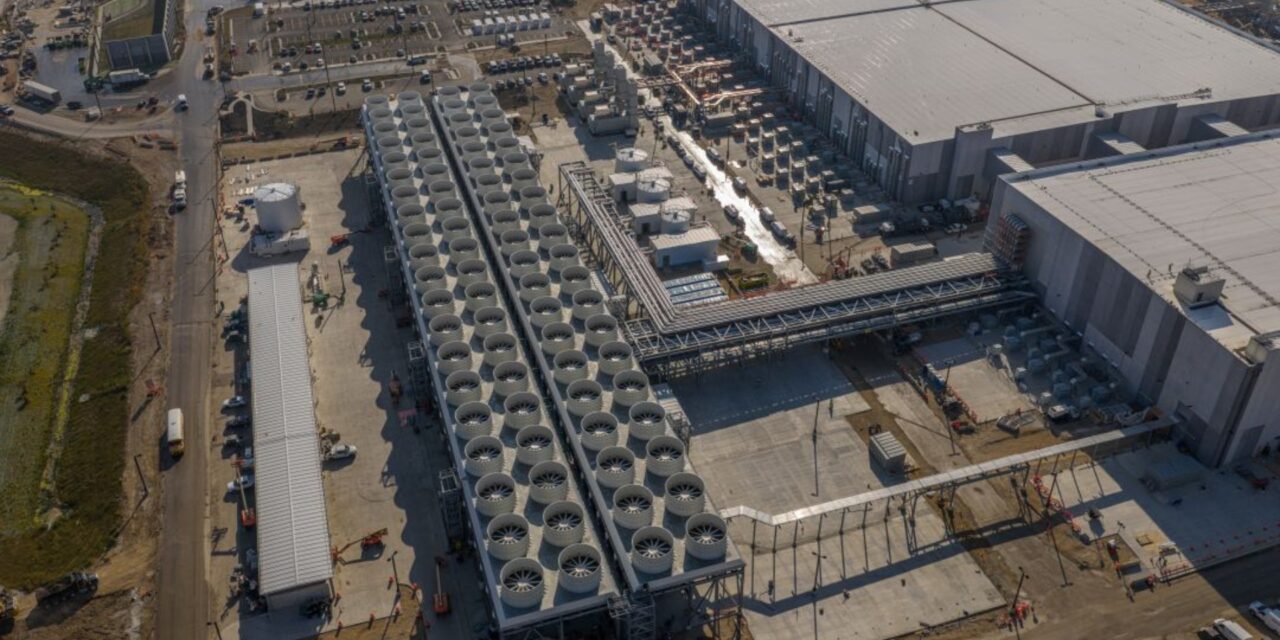
Thailand asks data center operators to suspend 49 buildouts until legal framework is complete — new legislation is supposed to create ‘airtight’ requirements for large-scale data centers
Data center builds are one of the hotly contested items worldwide. Many states and cities have upheld moratoriums on new buildouts due to power usage, water consumption, and noise concerns. Thailand is the latest nation to pump the proverbial brakes, with the government requesting that existing buildouts hit the pause button while coming up with a more precise regulatory framework.
- The data center cooling state of play
- The custom AI ASIC state of play
- America’s AI chip rules keep changing — and the rest of the world is paying the price
- GTC 2026: Ian Buck press Q&A transcript — VP of Hyperscale and HPC speaks out on shelving CPX and shipping LPU decode this year
- Demand for data center CPUs has surged, and AI agents are responsible
Government heads requested that agencies compile information about current and future data centers during this week, in a bid to create unified legislation. The country currently has few laws specific to data centers, leading to legal voids like zoning a data center as a “warehouse” right next to a hospital. Much like everywhere else, the country has seen growing complaints about data centers’ water and power usage.
After the week is out on September 11, the government expects to take about a month to come up with a regulatory draft, making the pause technically an indeterminate timeframe — though further delays wouldn’t benefit either party, as Thailand considers the industry critical to the country’s competitiveness. The catch is that pausing construction isn’t enforceable, so companies can elect to plow ahead regardless while the legislation is discussed.
NESDC (National Economic and Social Development Council) secretary-general Danucha Pichayanan is very specific: “we don’t have the power to suspend the construction of the 49 data centers” currently under construction. However, when the legislation arrives, it will apply retroactively to ongoing projects, though with an adjustment period for in-progress builds. New builds will naturally need to comply with the legislation from the get-go.
Some companies may elect to soldier on with the belief their buildouts will be in compliance with the reasonably predictable content of the new laws, or betting that they could win future legal challenges — a dynamic that’s already in play elsewhere with Project Jupiter. The incoming legislation is expected to cover power consumption (and possibly generation), closed-loop cooling, and water-surplus guarantees, meaning builders already have a fairly good idea of what they’ll need to do.
Not complying with the request for a pause might be a game of political chicken, though, as the government may retaliate with regulatory delays and additional costs to power connections. Just last Thursday, Thailand’s energy ministry raised concerns over a Bangkok data center that may be planning to hold diesel stockpiles far in excess of the 200,000 liters it has permission to.
On that topic, Thailand revised laws on industrial power delivery last July, and among other requirements, demands a bank guarantee of ฿4.5 million ($134,000) per megawatt. Half the money will be refunded when the actual usage reaches 50% of proposed utilization, and the rest when usage hits 70%. This mechanism is meant to stop preemptive allocation of power delivery capacity that might remain unused for months, years, or not at all — once again, mirroring datacenter playbooks elsewhere around the world.
At face value, the amount of $134k per megawatt sounds like a small price to pay for a builder to get ahead of the pack, but its per-megawatt nature means that a hyperscale facility pulling 200 MW or more needs to place around $27 million in escrow.
With the power laws recently revised, water consumption is seemingly the largest concern, as the current legal framework allows companies to make deals directly with utilities without additional safeguards. For example, in Chonburi, an operator signed a decade-long deal with Eastwater Stecon Utilities for 3.3 million cubic meters annually, or about 36,900 residents. It’s expected that the new laws will add much stricter requirements to avoid localized deserts.