The Video Games You Should Play This Weekend – March 27
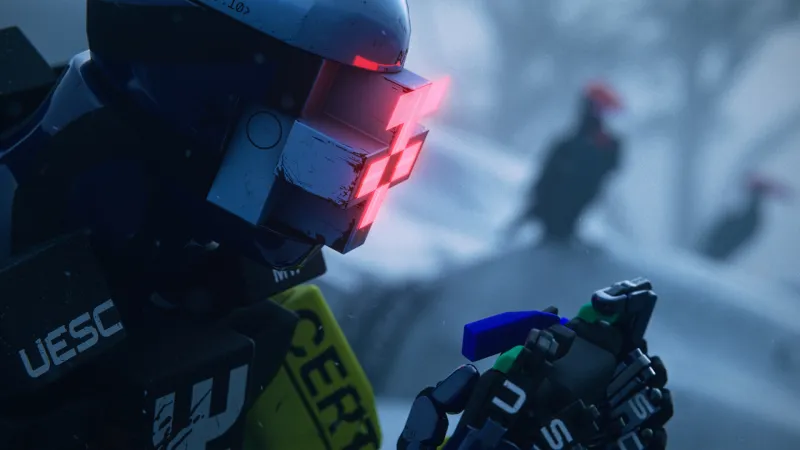
This weekend we’re playing a new entry of an old shooter, a new entry of an old racing game, old Marvel games, and a new (but also kind of old) sports game. It’s kind of crazy that Bungie’s Marathon originally released in 1994 and Graffiti’s Screamer released in 1995, and for the most part, both of those franchises have been mostly dormant for the last 30 or so years. But then this month, both of those games got new, very different entries, and they were both made and released by the original developers who created the first games all those years ago. And people seem to like both of them! I don’t know if it’s the right turn of phrase, but it feels like I should say… small world?
Also, today, we revealed Game Informer’s next cover game: Soulframe, from the creators of Warframe. You can read more here, and we will reveal a lot more from the issue soon. It’s a good one.
But now it’s time for the weekend and our usual recommendation of games and things you should check out! But before that, here’s a recap of the biggest stories of the week:
- Cover Reveal – Soulframe
- Ghost Of Tsushima And Yōtei’s Legends’ Co-op Modes Are Experiments According To Lead Designer
- Everything Announced At the March 2026 Xbox Partner Preview
- Sony Announces PlayStation 5 And Portal Price Increases Coming Next Week
- From Visual Novel To Fortnite, Here’s A Brief History of Invincible in Video Games
- Marathon Review – Actions Have Consequences

Marathon
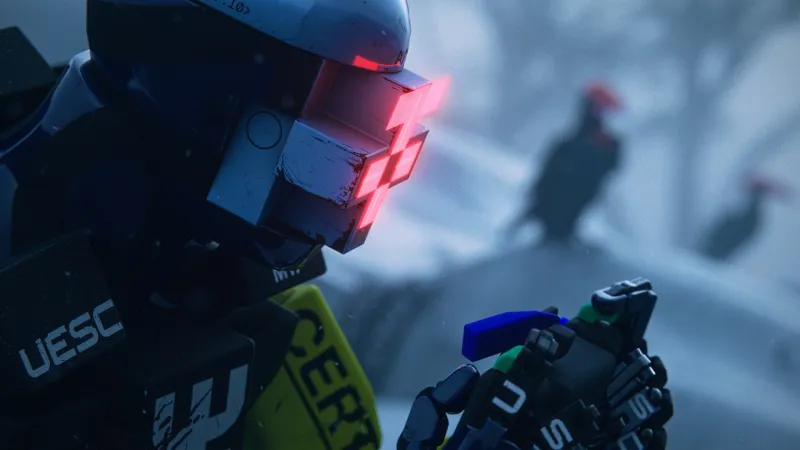
Marathon is (mostly) a game about various trios dropping into maps, attempting to find the best loot possible, and extracting safely from the map, killing any enemy AI or other players you might encounter along the way. There are new duo variants being tested in-game, and of course, you can always hop into the game solo as a Runner or as a Rook, the robotic shell who loads into a given map with the goal of scavenging. As you might expect, the trio nature of the game implies that you play with two friends. As much as I enjoy doing that, I equally enjoy playing solo, with Crew Fill on, so that I’m put into a trio with two random players.
Maybe it’s a sign of the times, but there’s something so interesting about hopping into a trio with two random players and seeing and feeling in real-time how we three strangers come together to complete a goal. I’m always shocked when the other two players are down to help me complete my objectives, ignoring their own, or vice versa. I love hearing the way others speak in a game like Marathon – I was dying the other night, laughing at the way this guy from Philadelphia was talking down to a Rook that wouldn’t get away from us; I enjoyed just as much a match I played last night with two players from Brazil who asked if they could practice speaking English with me.
I guess what I’m getting at here is that for as enjoyable as Marathon is as a video game – and it really, really is, and I’d echo the thoughts of Game Informer’s Marathon review – it is also a fantastic anthropological experiment in how players from all over the world interact in a ruthless, cutthroat sci-fi world where your only goal is to extract as much valuable loot as possible.

Screamer
I am not not a racing game fan. There are a handful that have managed to grab me, like the original Burnout games, F-Zero X on Nintendo 64, and of course, everyone’s favorite Ridge Racer, the one that was a launch game for the PSP. For some reason I spent a lot of time with that one. All of that to say that Screamer was not one I have been keeping a close eye on, but playing through the first two or so hours, I admit I am intrigued. The story mode, which has far better cutscenes and production value than it has any right to, is structured a bit like F-Zero GX on the GameCube with impressive cutscenes taking place between challenging races. It is all heavily inspired by anime, with visually distinct characters who wear their motivations and emotions on their sleeves.
I am also enjoying the racing part, but I admit I am not very good. It throws new mechanics at you nearly every race with a unique control system that places drift on the right control stick. You also build boost by shifting gears at the right time and activate it by performing a button press that reminds me active reload from Gears of War. You can read Matt Miller’s review here where he writes about how all the systems get overwhelming in the long term, and I can definitely see myself hitting that point. But for now, I think I am going to drop the game down to easy and enjoy the ride (so to speak) of the narrative.

Marvel Maximum Collection
Today’s release of this new collection of early Marvel games gives everyone the chance to experience the highs and lows of many of the big comic books games of the 80s and 90s. The standout inclusion for many is likely X-Men: The Arcade Game, including full online multiplayer support for up to 6 players. We also get the chance to play through Captain America and The Avengers, Spider-Man/Venom: Maximum Carnage, Venom/Spider-Man: Separation Anxiety, Spider-Man/X-Men: Arcade’s Revenge, and even the infamously difficult 8-Bit Silver Surfer. Where those games released on multiple platforms with distinctions between versions, you also can pick which version you want to play. In many cases, these games include cheat options to make them more manageable to experience in their entirety. You also get cool features like a music player, archives of old documents (like instruction manuals), Rewind and Save Status functionality, and the option to play with CRT and scanline visuals, for that real nostalgic effect. Playing them now, not every one of these games is a winner, but they’re all fascinating glimpses into one of the heydays of comic-inspired video games.

Basketball Classics
As most modern, officially licensed sports games feel locked in an arms race to squeeze as many modes and as high-fidelity graphics as possible into the final product, I’ve found myself missing the simplicity of the sports games of yesteryear. When I first heard about Basketball Classics (which, I admittedly missed when it came to Steam in 2019) coming to Switch last week, it sounded right up my alley. Retro visuals and simple gameplay? Check. Non-licensed, but fully editable rosters full of homages to classic players? Check. A few simple, non-bloated modes with no microtransactions? Also check. I would have preferred a 16-bit approach instead of the 8-bit-inspired visuals and maybe a few more modes, but it’s an excellent throwback to an earlier era of sports games.

I can see myself firing up Basketball Classics every now and then, re-creating my favorite teams, and playing through season after season. Now, I just hope other sports developers follow suit.