US AI data centers projected to become the fifth-largest natural gas consumer in the world by 2035 — consumption to grow by 15 billion cubic feet per day as demand for compute increases
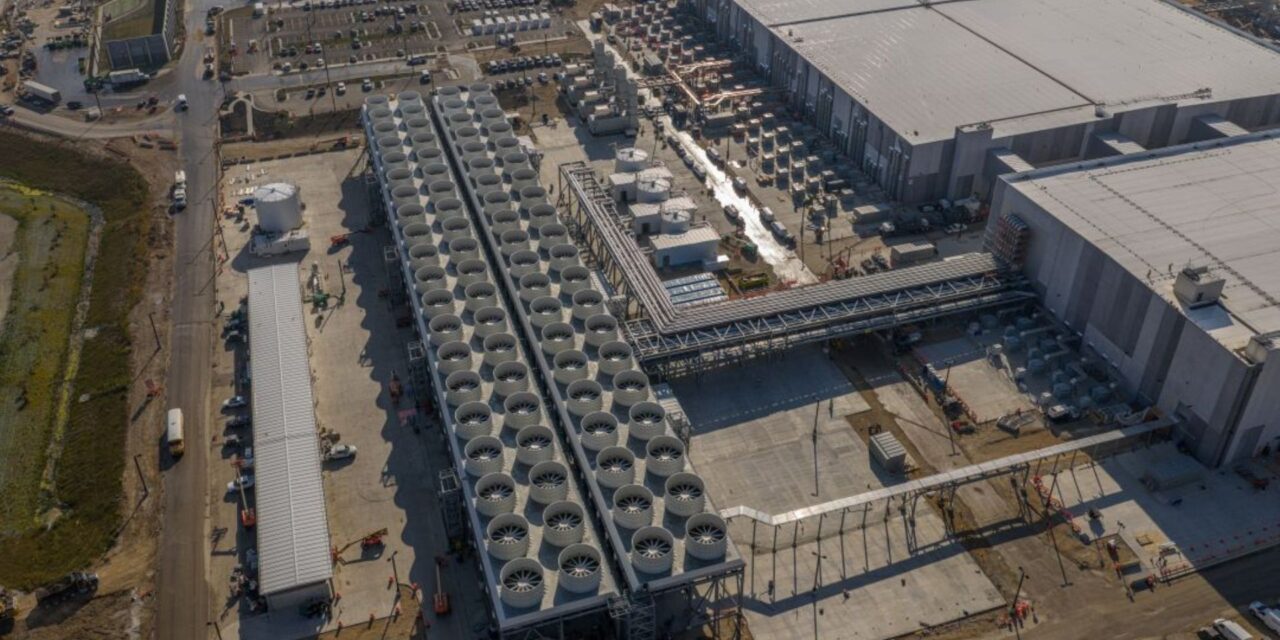
The estimated natural gas consumption of data centers in the U.S. is expected to massively increase as these facilities increasingly rely on gas turbine generators for their power. According to Bloomberg, data centers are projected to use up to 15 billion cubic feet per day by 2035, a 117% increase from the previous forecast of 6.9 billion cubic feet. This number tracks with other data center forecasts, which suggest that data centers will use 20% of U.S. power by 2035, amounting to about 194 gigawatts.
- The data center cooling state of play
- The custom AI ASIC state of play
- America’s AI chip rules keep changing — and the rest of the world is paying the price
- GTC 2026: Ian Buck press Q&A transcript — VP of Hyperscale and HPC speaks out on shelving CPX and shipping LPU decode this year
- Demand for data center CPUs has surged, and AI agents are responsible
Many data center projects have already been delayed by the lack of available power infrastructure, with power plants expected to take so much longer before they come online. It’s for this reason that many developments have turned towards onsite generators, so much so that AI demand is now compounding the jet engine shortage already plaguing the aviation industry.
Elon Musk was among the first to use gas turbines to power a data center when he deployed them at the Memphis Supercluster in 2024, even though he didn’t have permits for some of them. Now, it seems that the world’s richest man has seen this trend and has invested a billion dollars to buy a portable gas and diesel turbine leasing company. He even announced that SpaceX will start in-house turbine blade manufacturing to help cut down on the manufacturing bottleneck plaguing the jet engine industry.
New technologies like small modular reactors are currently being developed as an answer to AI data centers’ insatiable demand for power, like Ampera’s 3D-printed modular thorium nuclear reactor or Valar Atomics’ Ward 250 nuclear microreactor. Many AI hyperscalers, including Amazon, Google, Microsoft, Nvidia, and Oracle, have even invested in projects like these in a bid to generate massive amounts of clean energy for AI. However, they’re expected to take a few more years before they could become commercially viable — time that tech giants do not have. Because of this, Musk said that “natural gas will still be needed to supplement and bootstrap solar for several years.”
The deployment of natural gas turbines in data centers isn’t good news for the communities living around them, though. The NAACP said in its lawsuit against SpaceXAI that the use of these turbines at Colossus 2 increased nitrogen oxide exhaust by 111%, PM2.5 particles by 83%, and formaldehyde emissions by 88%. While the company has already pledged to remove all its unpermitted generators, the process will take at least a year as the portable turbines are slowly being replaced by a 1.2-gigawatt on-site power plant.
Aside from this, the massive demand for natural gas could potentially put a strain on the supply, causing prices to rise and hit the average consumer. Domestic natural gas producers are projected to raise their output by 35 billion cubic feet per day in the next decade, but this still falls short of the forecasted demand by around 11 billion cubic feet per day. So, unless output manages to catch up with the demand, prices are expected to shoot up and cause a scramble for available supply. Still, some experts suggest that there are still more than enough undeveloped gas fields within the U.S. to allow the industry to increase natural gas supplies and reduce costs.