
China’s CXMT targets 30% DRAM memory market share by 2030 with sixth mega-fab — future plans bottlenecked by access to advanced chipmaking tools
Following its massive $8.6 billion initial public offering (IPO) in July, ChangXin Memory Technologies (CXMT) began considering building its sixth DRAM fab in China to boost memory output in the coming years, Reuters reports. If all announced projects proceed as planned, the company’s production capacity could more than double in the mid-term future, the report claims. Meanwhile, investment banker Dan Niles believes China could capture 30% of the DRAM market by 2030, according to P Equity Research.
Growing at a rapid pace
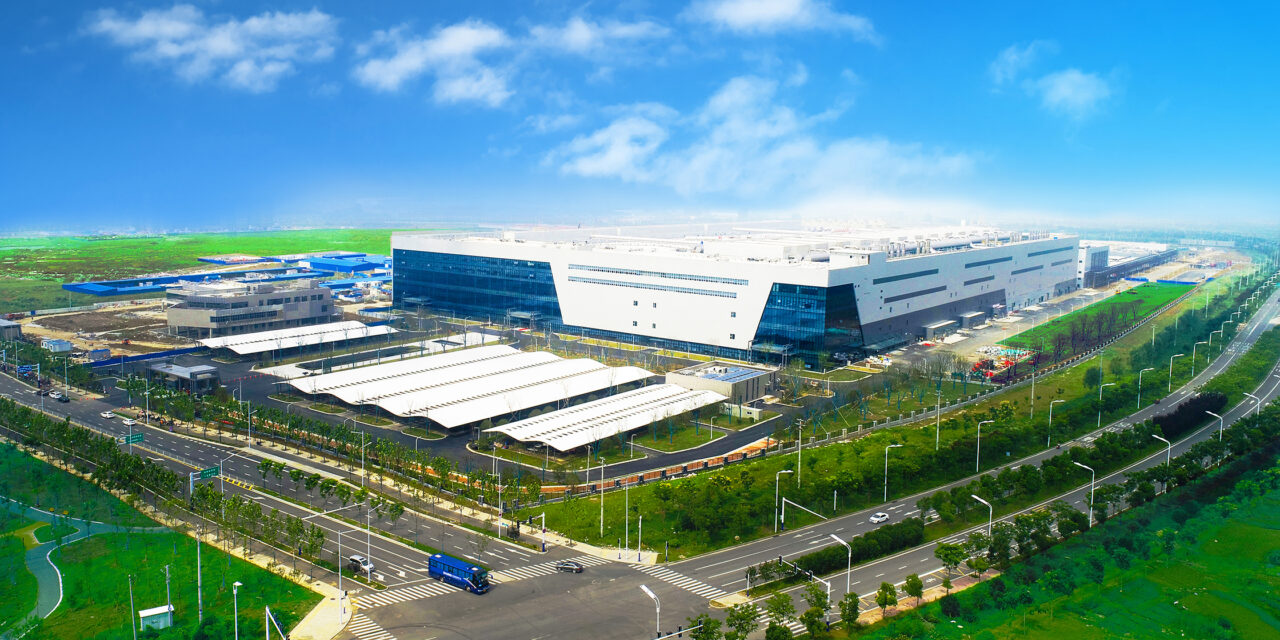
CXMT currently operates three 300-mm DRAM fabs: two near Hefei and one in Beijing’s Yizhuang district. Unofficial reports claim that each fab is capable of processing around 100,000 wafers per month, so the company’s output may be around 300,000 wafer starts per month (WSPM).
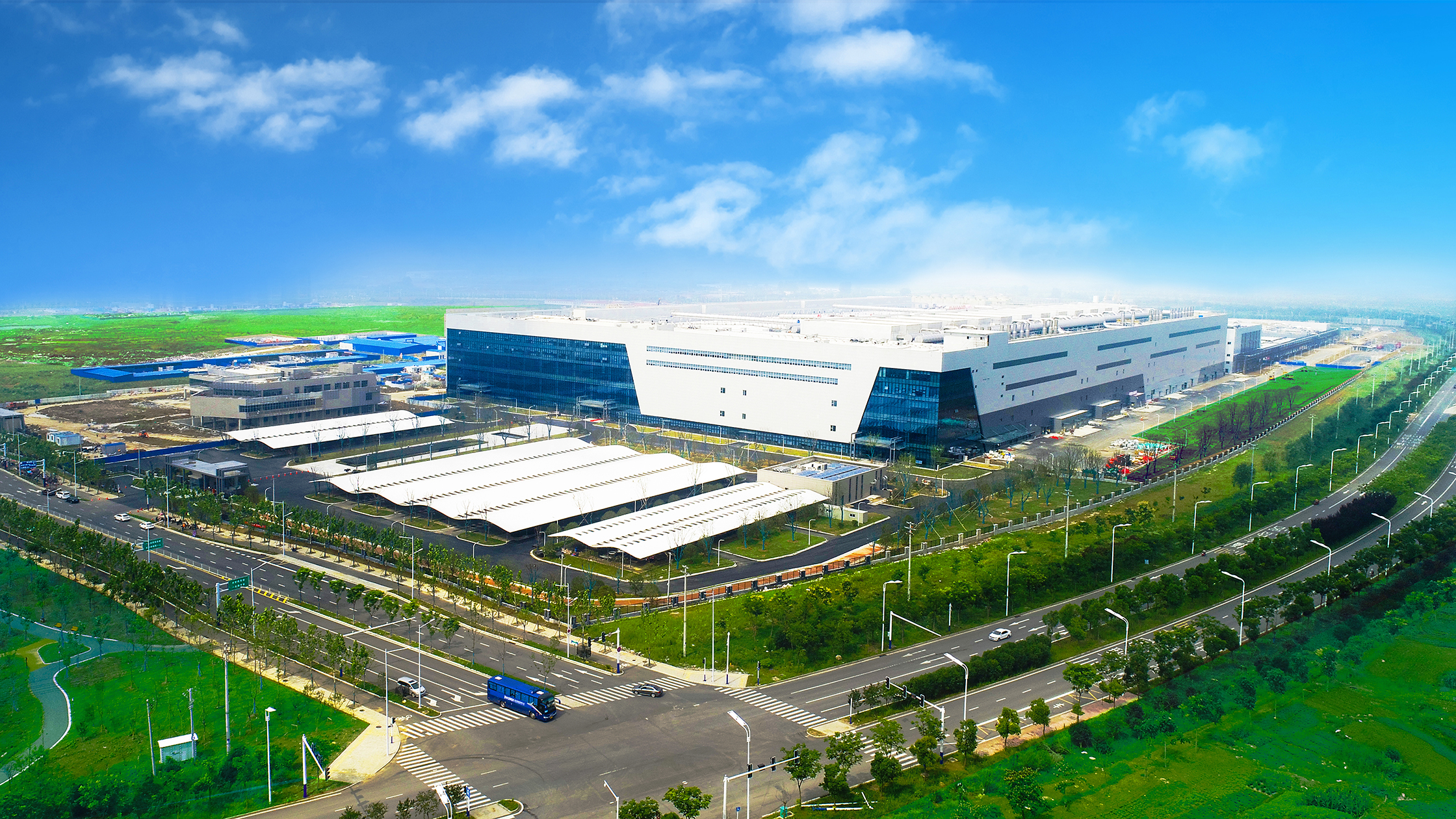
The company is pursuing an aggressive expansion strategy and is currently building additional fabs near Shanghai and Hefei, according to Reuters. The company’s sixth fab will reportedly be located in Beijing’s Yizhuang area, adjacent to its existing facility. Once these projects are fully operational, the company’s total manufacturing capacity could exceed 600,000 WSPM, which will double its current output, according to Reuters. Meanwhile, researchers from Citrini believe that CXMT could exit 2026 with a capacity of 350,000 WSPM, which is just 25,000 WSPM shy of what Micron targets by the end of the year. Citrini Research models that by 2030, CXMT will have production capacity of around 950,000 WSPM.
Building three big DRAM fabs is a big deal, from both financial and execution points of view. However, it is not a secret that virtually all fabs owned by Chinese companies are built using money from local and federal governments under the ‘Hefei model,’ which aims to transform cities into economic juggernauts by leveraging high-risk projects. So it is not surprising that both Shanghai and Beijing have provided financial assistance and other forms of support to attract CXMT to their regions, according to Reuters.
CXMT’s existing Beijing fab, operated by Changxin Jidian, received backing from E-Town Capital and Beijing E-Town Technology, both affiliated with the Yizhuang development zone, according to a person familiar with the matter cited by Reuters. In fact, the district has evolved into a relatively major semiconductor manufacturing hub that already hosts CXMT, SMIC, Naura Technology, and Xiaomi, the report claims.
The right timing
The proposed fab would be located in Beijing’s Yizhuang district, roughly 20 kilometers southeast of the city center, where CXMT already operates a 300-mm DRAM manufacturing facility. The planned production capacity and total capital investment for the project have not yet been disclosed, although Reuters points out that a leading-edge DRAM fab typically costs well over $10 billion.
Sources cited within the report said the company is seeking at least 60 million yuan ($8.9 million) in financial support from the Beijing Economic-Technological Development Area, and additional state-owned technology companies have also expressed interest in participating. Discussions remain preliminary, and neither the overall size nor the structure of the financing package has been finalized.
From CXMT’s point of view, this is the right time for financial influxes as the company can sell all of its DRAM output at good prices to a variety of customers. Those being domestic PC and server makers (including Lenovo), and global brands such as Micron, Samsung, and SK hynix, which prioritize shipments of their DRAM output to the AI sector.
Apple, Dell, and HP have all reportedly qualified CXMT’s memory and are ready to deploy it in their devices sold in China, while Acer and Asus have already begun to use DRAM from the Chinese maker. If CXMT signs long-term supply contracts with the world’s leading PC makers, it is nearly guaranteed to sell out its output to these vendors in the coming years, which justifies investments in its expansion.
30% of DRAM market by 2030?
Dan Niles, founder of Niles Investment Management, believes that many investors underestimate how much share CXMT could capture over the coming years and how much share China may seize in the coming years.
His argument stems from historical DRAM market leadership shifts. In 1975, U.S. companies controlled 95% of the DRAM market, with Intel alone holding 75%. Japan then turned DRAM into a commodity business, increased its share to 80% by 1985, while the U.S. fell to 10% and then just 2% by 1990. Then South Korea repeated that playbook in the mid-1980s and eventually displaced Japanese suppliers, and today it accounts for roughly 62% of the global DRAM production.
With Micron’s investments of hundreds of billions of dollars in U.S. DRAM capacity, the country is set to regain its massive presence on the global DRAM scene; China could capture 30% of the market by 2030, according to Niles.
China already consumes around 30% of global memory output, as it produces hundreds of millions of PCs and smartphones both for domestic and global consumption; it is reasonable to expect the country to produce as much commodity memory locally as possible. Keeping in mind China’s push for semiconductor self-sufficiency and willingness to invest huge amounts of money in domestic fabs, it is possible to expect the country to rapidly gain DRAM output and share. China is already pushing its chipmakers hard to start DRAM production, and the government reportedly asked CXMT to share its process technologies with others.
Not that easy
There are multiple factors — both technological and political — that may, if not stop, but greatly slow down CXMT’s and China’s DRAM expansions in the coming years.
First up, there are export controls in place that prevent Chinese entities from getting sophisticated wafer fab equipment required to make DRAM using 18nm-class process technology or more advanced. If the proposed MATCH Act passes, then limitations on Chinese companies will get more severe, which will reduce their expansion ability.
Secondly, even if CXMT (or another Chinese DRAM maker) finds a way to produce more advanced DRAM using relatively outdated tools (i.e., use old tools for sub-16nm nodes), they will need to acquire those tools in quantity to increase their output. Meanwhile, companies like ASML have relatively limited production capacities, and CXMT is certainly not the only memory maker seeking to expand its production capacity in the coming years. While SMEE and SiCarrier are developing lithography tools in China, they will be unlikely to ramp up production of immersion DUV scanners to higher levels any time soon.
Thirdly, building fabs is one thing; operating leading-edge DRAM production at high yields is another. China has recruited engineers from Micron, Samsung, SK hynix, and TSMC for years, but scaling from three to six or more fabs requires thousands of experienced process, yield, device, lithography, and integration engineers. Building fabs adjacent to existing sites enables CXMT and other chipmakers to share experience and knowledge internally, which helps to develop experienced talent. But will it be enough for the long term?
Next, expanding wafer capacity alone is insufficient. DRAM producers must continuously migrate to finer process technologies (e.g., 16nm-class, 14nm-class, 12nm-class) to remain cost-competitive. If export controls delay access to equipment or materials needed for these nodes, Chinese fabs could end up producing more wafers at a higher cost per bit than competitors.
Finally, some American lawmakers want to prohibit U.S.-based companies from acquiring memory from CXMT and other Chinese vendors. They have every reason to believe that China wants to take control of a sizeable DRAM market share in a bid to use it in its strategic interest and have leverage over the market, something the country already has with rare earth metals. If the lawmakers manage to turn the proposal into law, demand for CXMT’s and other China-made DRAM will drop. It will probably be sufficient inside China, but whether it will be enough to justify 10 or more big DRAM fabs is a different question.