Intel says it will launch new core with Nova Lake on desktop first, not in data center — VP Robert Hallock hopes enthusiasts ‘do the math’ compared to AMD
Intel will launch its new core with Nova Lake on desktop first, not in the data center. Tom’s Hardware Premium recently sat down with Intel VP and general manager of the enthusiast channel business Robert Hallock and asked about his reaction to AMD launching Zen 6 first in the data center with new EPYC Venice CPUs — breaking with over a decade of AMD leading with a client release for its new architectures. Hallock opened up about Intel’s enthusiast roadmap and said the company is “very serious” about executing that roadmap.
- CPU scaling with DLSS
- Ryzen to the top: How AMD innovated in the gaming CPU market
- How ARM is working its way into PCs
- AMD CES 2026 gaming trends press Q&A roundtable transcript
“I think it’s a natural reaction for them. Makes a lot of sense. What I would say is, as we think about our own roadmap, I have a new core. It’s coming to desktop first. I mean, I hope enthusiasts do the math about that one, and that’s all I’m going to say,” said Hallock when we asked for his reaction to the Venice launch.
AMD has a unified processor architecture across client and enterprise, which, combined with chiplets, allows AMD to easily scale up or down new architectures to fit a wide range of applications. The core architecture and chiplets at work in the data center are largely identical to the ones in a consumer processor; minus some obvious cutting around memory channels, PCIe lanes, etc.
Intel’s architecture sharing isn’t as clean, with various codenames thrown around for each core with each new generation of products, regardless of whether those products are from Xeon or not. However, Intel’s core architectures share a lot of DNA. Golden Cove was launched first with Sapphire Rapids but was tweaked for Raptor Lake with Raptor Cove; Redwood Cove launched in Meteor Lake first before working its way into Granite Rapids. The rumored “Panther Cove” core architecture for upcoming Diamond Rapids CPUs is likely a refresh of the Cougar Cove cores in Panther Lake. With Nova Lake, the new core (rumored to be called Coyote Cove) will launch on desktop first, with whatever variation (or perhaps an entirely new core) working its way into Xeon eventually.
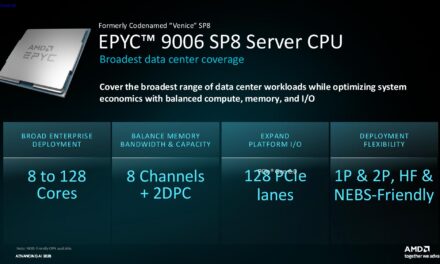
The sudden surge in demand for CPUs in new agentic AI data centers has upended the traditional release cadence of AMD and Nvidia. Nvidia has shifted great focus toward its new Vera CPU, while AMD moved forward with Venice ahead of Olympus Ridge; the codename for consumer CPUs with the Zen 6 microarchitecture. Intel’s roadmap, at least among the enthusiast desktop business, remains steadfast, Hallock suggested.
“I have all the new CPUs all the way out to 2030. I have [a] back to back to back to back cadence of product for gamers, for desktop, built for that purpose,” Hallock said. “Obviously I can’t go into what any of that is, but I am accelerating for the gaming market… we’re moving faster than we ever have in product, in release cadence.”
It’s worth reiterating that Hallock is referring to Intel’s roadmap here. He does not have processors in hand reaching out to 2030.
Although the roadmap sounds ambitious, Intel lost plenty of points with the enthusiast community when Arrow Lake launched. You know the story by now, with the new range often underperforming the older Raptor Lake offerings in games. Hallock says he understands that hesitation.
“I understand people are skeptical after the last couple years. I truly get that. But the signal Intel is trying to send is, like, we’re gearing up for one of the most significant desktop CPU launches we have ever had.”
Intel has made some efforts to regain the lost trust with Arrow Lake with Arrow Lake Refresh. The two CPUs in the range, the Core Ultra 5 250K Plus and Core Ultra 7 270K Plus, rank among the best CPUs for gaming, helping erode the narrative that the original Arrow Lake range set in stone. That wasn’t an accident. Hallock revealed that a “pretty much completely different” team worked on Arrow Lake Refresh, and that team is moving forward with Nova Lake.
“We took a team that was time-shared with other businesses, and now this slice of the market has a full org structure inside Intel… they’re putting real people with a lot of budget behind it, right? And having an owner, a sponsor, people that care about it, looking after it, custodians of that work, it makes a real difference,” Hallock said. “[The team was] pretty much completely different. Marketing people, different product managers, different business people, and we simply have a different philosophy on how this market should run and what people should get for their dollar.”
Presumably, Hallock’s team and the philosophy driving it is born partially out of his time at AMD. The VP spent 12 years at AMD, covering numerous significant milestones, including the introduction of Ryzen and the Zen core, and AMD’s first 3D V-Cache CPU. He joined Intel in 2023, and has overseen the launch of Arrow Lake and Arrow Lake Refresh. As a technical marketing leader, Hallock doesn’t meddle in the nuts and bolts of processor design. However, he covers the rollout of products, including aspects like naming and branding.
You can read the transcript of the full interview at our Tom’s Hardware Premium site.