
Nvidia’s DLSS 5 looks incredible. I’m just not sure whose vision I’m seeing
Nvidia’s controversial DLSS 5 is out this week, and it was a big topic of discussion in this week’s episode of The Full Nerd.
While I haven’t had a chance to test it out myself, by the time you read this I’ll be furiously updating my Nvidia drivers and seriously considering splurging on a copy of NBA 2K27 just to get a look at the earliest game to launch with official DLSS 5 support. I’m curious to see if the reported performance dips that come with enabling DLSS 5 are actually counteracted by Nvidia tech like Multi-Frame Generation, and I want to see what kind of tuning the player can do to adjust how DLSS 5’s new real-time AI model upscales game graphics.
Welcome to The Full Nerd newsletter—your weekly dose of hardware talk from the enthusiasts at PCWorld. Missed the surprising topics on our YouTube show or the latest news from across the web? You’re in the right place.
Want this newsletter to come directly to your inbox? Sign up on our website!
But a question from a member of The Full Nerd audience during this week’s recording got me thinking: with so much control over how big-budget games look being ceded to Nvidia’s algorithms, is it time for developers to start putting “as the developer intended” modes into their games?
I don’t know if the person who asked a similar question to The Full Nerd crew (shoutout to friend of the show LiquidR) had the same concerns, but after watching all the brouhaha unfold over the initial DLSS 5 demo at GTC earlier this year I think I’ve been mulling this over for a while now.
I like to play my PC games on my big LG OLED TV when I have the time, but when I’m just watching movies I leave the TV in its Filmmaker Mode. I do that because it’s marketed as disabling image processing (not that I’d ever turn motion smoothing or image sharpening on to begin with) as well as staying as close as possible to the movie’s “original aspect ratios, colors, and frame rates to more closely match the vision of the director”, according to LG’s marketing materials.
I don’t have the best eye for details like aspect ratio or frame rate so I can’t say for sure how much of a difference Filmmaker Mode makes when I’m watching my 4K copy of Sorceror, but I can tell you that it looks amazing on my LG OLED and I feel good about knowing I’m doing what I can to see the film as its creators intended.
Should game developers start putting something similar in their games, like a “Game Maker Mode” or a “As the developer intended” setting or something?
This is why I’m so excited yet nervous to see how DLSS 5 affects the way games look and play this year. I remember how drastically different the character of Grace from Resident Evil Requiem looked when DLSS 5 was enabled during an Nvidia demo, for example, and it freaked me out.
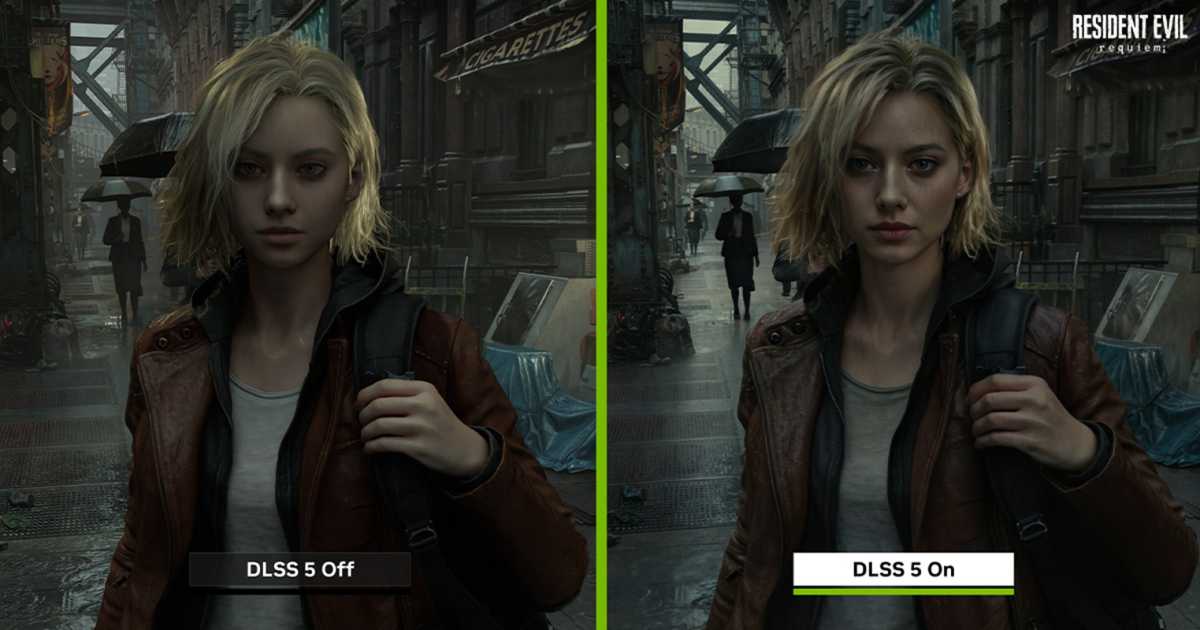
Remember this?
Nvidia
So while I’m sure Nvidia has learned from the backlash to that “yassifying” effect and taken pains to update their settings and messaging accordingly, I’m no longer confident that when I flip DLSS 5’s advanced features on I’ll be seeing exactly what the game I’m playing is actually meant to look like. And while Nvidia has taken pains in its press briefings to acknowledge concerns around this and promise that DLSS 5’s new upscaling tech is “trained to preserve artistic intent”, I guess I don’t really trust Nvidia to even know what that entails, much less ensure it’s done well.
What do you think? I expect most game developers are already overworked and would find more effective ways to use any free development time they had than taking time to customize a unique “as the creator intended” visual setting, but I wonder if we’ll see more work like that being done as neural rendering tech gains increasingly more control over how our games look when we turn it on.
And hey, I hear you, person writing that snarky email right now: it’s true that nobody is forced to use DLSS 5 or any form of AI-powered upscaling when playing PC games. Between modding, tweaking and upgrading I love that gaming on PC gives the player unrivaled control over their experience, and that includes having the freedom to flip all the upscaling tech off and just run your favorite games raw and unfiltered. I do so where I can, and if you can do that and still enjoy playing a game like NBA 2K27 or Star Wars Zero Company, more power to you!
But I don’t have the kind of beefy gaming rig I’d need to run those games at the quality and frame rate I want without turning on DLSS. And while I’m so grateful for technologies like DLSS because it makes a great game like Zero Company look and run amazing (for the most part) on my RTX 5070 system, I can’t help feeling trepidatious about where we go from here.
Then again, the one-two punch of skyrocketing component prices (thanks AI) and increasingly photorealistics games does suggest fewer and fewer people are going to have the hardware to run games without upscaling tech and maintain a playable framerate. So perhaps the whole concept of a “Developer’s Intended Experience” mode will really only make sense for teams launching less demanding games, and if that’s the case, would those developers even really worry about people altering the vibes with DLSS 5? What do you think?
In this week’s episode of The Full Nerd
DLSS 5 was the big topic du jour this week now that we’ve seen it running in games like NBA 2K27, and I was one of many viewers who was excited to see intern Glenn take a seat at the big table to join regular host Adam Patrick Murray as well as PCWorld’s Brad Chacos and Michael Crider in chatting through it.
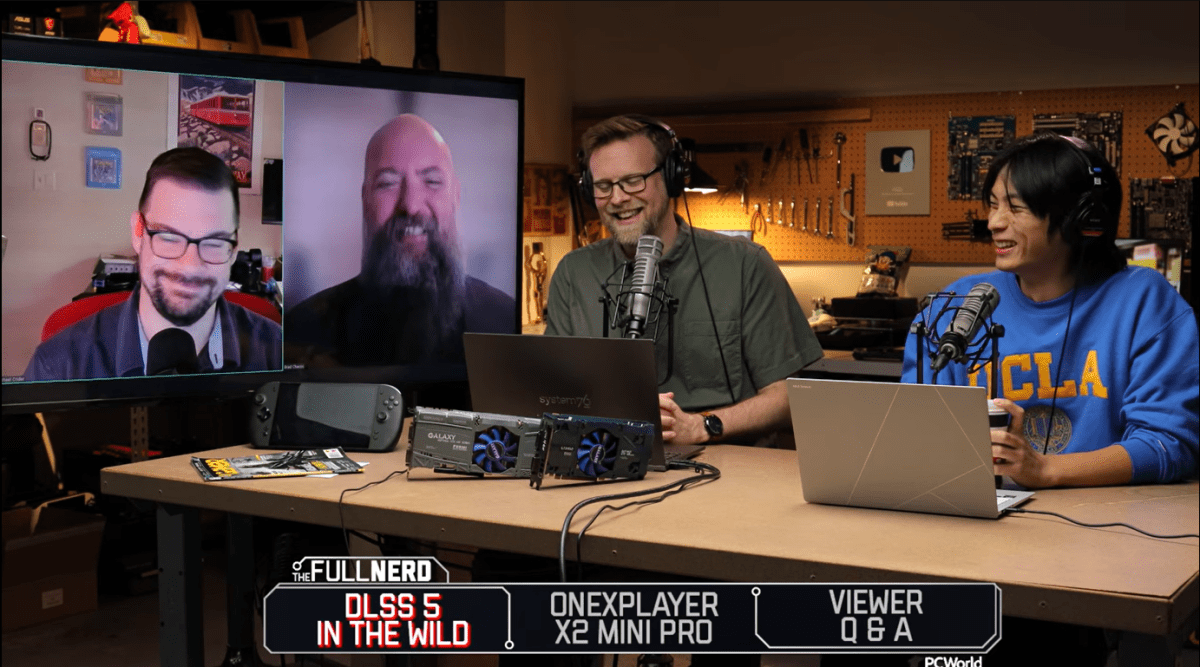
PCWorld
It was a fascinating exchange, especially since Brad has sat in on DLSS 5 demos, and it was followed up by some insight from Adam about the OneXPlayer X2 Mini Pro gaming handheld. And of course, the panel makes time to take your questions from the chat and the Discord!
Nerd news of the week
While Nvidia’s launch of DLSS 5 is dominating a chunk of the nerd discourse this week, I wanted to quickly recommend a few other interesting stories I read from around the web:
- Cash in on the AI boom by renting out your spare compute: Two new startups are reportedly working on programs aimed at compensating people to remotely use their GPU-equipped PCs for AI tasks when the PCs are idle. They’re pitching it as a greener, more equitable alternative to building more data centers, and it sounds a bit like the old Folding@Home program.
- Someone managed to run Zork on the Steam Controller’s internal hardware: One enterprising nerd managed to get the old text adventure Zork running on the Steam Controller’s internal processor via USB…nearly bricking it in the process?
- Tape companies ship 160 exabytes of storage in 2025: Did you know manufacturers of old-fashioned tape drives, which use physical magnetic tape to store data, are not only still doing brisk business but actually doing more than usual? Turns out even the most cutting-edge AI and tech companies still archive a lot of their data on very old-fashioned (and resilient) hardware!
- 12TB Steam “teraleak” spills more than a decade of lost PC gaming history: Someone leaked terabytes of what’s purportedly data from an old Steam server, and it includes a trove of info on games that were available on Steam between 2003 and 2013. We’re talking multiple playable early versions of games like Portal 2, Half-Life 2, Spore and Dragon Age: Origins, which are being mined as you read this to find fun nuggets of info about the games and their development.
That’s it for me this week, as I need to get back to figuring out how to get DLSS 5 running on my machine. For more, be sure to bookmark PCWorld and subscribe to the PCWorld YouTube channel! Want this newsletter to come directly to your inbox? Sign up on our website!
This newsletter is dedicated to the memory of Gordon Mah Ung, founder and host of The Full Nerd, and executive editor of hardware at PCWorld.