
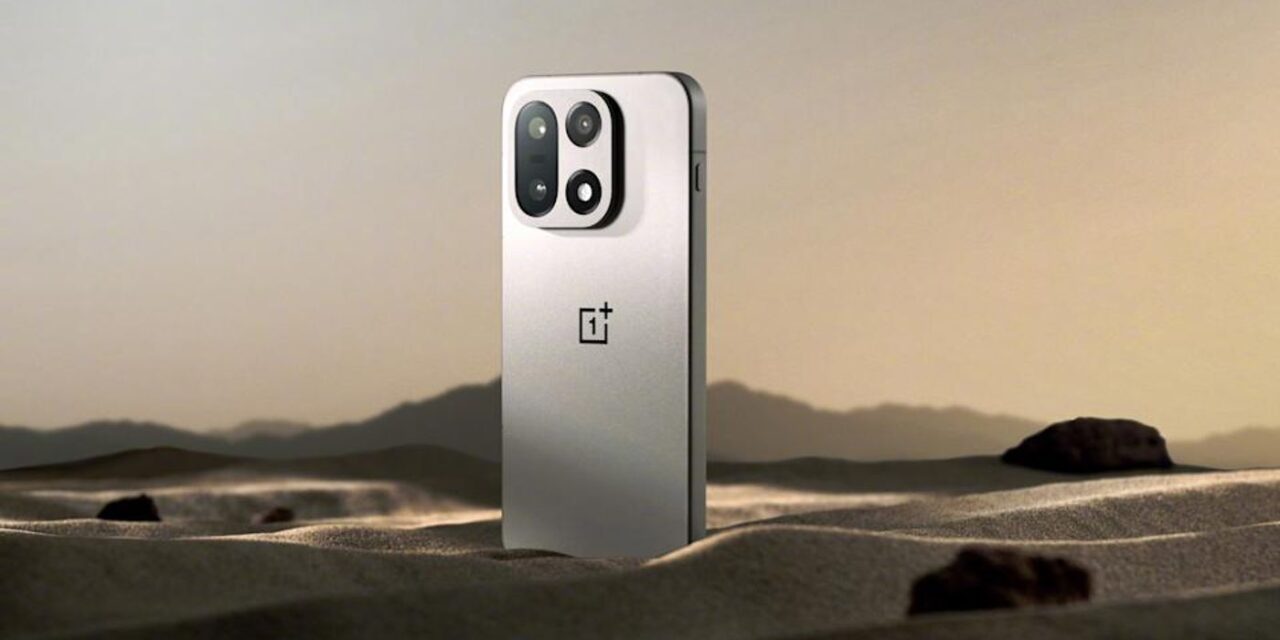
OnePlus has confirmed a global launch for the OnePlus 15 and started teasing a new “Sand Storm” finish and tougher chassis treatment. Credible reporting points to Qualcomm’s Snapdragon 8 Elite Gen 5, a super-fast 165 Hz display, and a substantially larger battery—though exact capacity varies by leak. Below is a premium, fully fleshed-out brief you can publish, with clear labels on what’s official versus rumored, plus context that helps readers judge the claims.
Key takeaways (what’s official vs. rumored)
Official: OnePlus has confirmed a global launch for the OnePlus 15 and revealed a new “Sand Storm” colorway that uses micro-arc oxidation on the frame; the phone will run Snapdragon 8 Elite Gen 5. These details come from OnePlus teasers and briefings covered by major outlets.
Strongly reported / likely: The handset is expected to debut first in China, with other markets following; the lock-screen date “October 27” in official imagery is widely read as a China launch hint. A 165 Hz panel is repeatedly cited by reliable reporters.
Rumored / to be confirmed at launch: Battery capacity sits somewhere between 7,000 mAh and 7,800 mAh depending on the source; wired charging around 120 W and possible 50 W wireless are also circulating in leaks. Exact camera sensor specs and pricing remain under wraps.
Release window & availability
OnePlus has said explicitly that the OnePlus 15 will see a global launch, which is notable because the OnePlus 13 rolled out to China months ahead of other regions. Coverage from multiple publications also notes that China should get it first, with a broader release to follow—so readers in the US and EU should expect a short delay but not the multi-month gap we saw previously. The most persuasive clue on timing is a “October 27” date shown on the phone’s own lock screen in OnePlus’ official imagery, a tactic the company has used before to wink at launch days.
Design & materials (and why the “Sand Storm” finish matters)
The star of OnePlus’ teasers is the “Sand Storm” finish: a dune-colored look paired with aerospace-grade micro-arc oxidation (MAO) on the frame and camera surround. Reporting claims this process forms a ceramic-like surface layer that OnePlus says is tougher than standard aluminum—and even harder, per marketing claims, than titanium—though we’ll need independent scratch and drop tests to verify real-world gains. A fiberglass rear panel is also mentioned; that could help keep weight in check while resisting temperature swings, but we’ll look for exact grams and durability ratings at launch.
Display: chasing ultra-smooth at 165 Hz
Multiple outlets state that OnePlus is moving to a 165 Hz display, up from the 120 Hz norm that most flagships still use. Besides sportier animations, the practical benefit is lower input latency and smoother scrolling—something gamers and power users notice immediately—though the real gain depends on OnePlus’ touch sampling and frame pacing. Expect a high-resolution AMOLED panel (leaks mention 1.5K from BOE), with LTPO for variable refresh to save power when static; if these specifics hold, this screen would slot among the fastest on a mainstream flagship this cycle.
Performance & thermal design
What’s official is the chipset: Qualcomm Snapdragon 8 Elite Gen 5—Qualcomm’s new top-tier SoC—so we should see sizeable jumps in AI acceleration, GPU throughput, and power efficiency versus last year. OnePlus also hints at improved cooling, which matters because sustained performance under gaming or video capture is where phones typically throttle; we’ll be watching for vapor chamber size and any graphite or phase-change materials. Early reports point to configurations up to 16 GB of RAM and 1 TB storage in China, although regional options often vary.
Cameras & imaging pipeline
OnePlus is talking up an in-house image-processing stack (often referenced as a new or updated DetailMax engine), which—if tuned well—can reduce the “wide vs. telephoto color mismatch” that plagued older multi-camera phones. The square camera bump seen in official images suggests a redesign that could make room for larger sensors or a periscope, but sensor sizes, apertures, and focal lengths haven’t been confirmed. Until launch, the smartest way to frame it for readers is this: OnePlus is promising consistency and detail, but the hardware specifics will dictate whether it closes the gap to the best camera phones of 2025.
Battery & charging: why the numbers conflict
Battery rumors are all over the map: some reporters cite ~7,000 mAh, others 7,300 mAh, and a few 7,800 mAh—the spread likely reflects different prototypes, testing units, or regional SKUs under consideration. Leaks also point to 120 W wired charging and up to 50 W wireless, which would align with OnePlus’ historical approach to fast charging while preserving battery health via aggressive heat management. Whatever the final capacity, the story readers care about is time to full and screen-on longevity under mixed 5G and high-refresh use; we’ll benchmark both once retail units arrive.
Software & AI features (OxygenOS 15)
On the software side, OnePlus’ site already leans into OxygenOS 15 with “Speed meets AI” positioning, so anticipate on-device AI tricks such as summarization, enhanced voice tasks, and context-aware suggestions—fueled by the Elite Gen 5’s NPU. The bigger question is update policy: with rivals promising five to seven years of OS and security updates, OnePlus needs to match or exceed to stay competitive in 2025. We’ll also watch whether Google’s Android 15 features (like more powerful Private Compute Core hooks) are fully exposed in OxygenOS or gated behind OnePlus-specific apps.
Early hands-on teases & what they imply
A pre-launch unboxing posted on Weibo (amplified by regional tech media) showed the phone in Sand-toned hardware with retail packaging—consistent with OnePlus’ own teasers. While such clips don’t validate performance claims, they strengthen confidence that design elements (finish, camera housing) are final. As always, we’ll treat any pre-release footage as corroborative, not conclusive, until embargoed reviews land.
What remains unanswered (and how to set reader expectations)
We still don’t have official camera sensor specs, exact battery capacity, regional SKUs, or pricing—the four pillars that determine value. The “October 27” timing looks credible for China, but a precise global retail date is unannounced; historically, OnePlus staggers by a few weeks, though some coverage hints at a faster US/EU rollout this cycle. If you’re upgrading, the safe advice is to wait for full reviews that test sustained performance, thermal behavior, and camera consistency across lenses.
OnePlus 15 (state of play) — spec table snapshot
-
Chipset (official): Qualcomm Snapdragon 8 Elite Gen 5.
-
Display (reported): ~165 Hz AMOLED, likely LTPO; leaks mention a 1.5K BOE panel.
-
Design (official/claimed): “Sand Storm” colorway with micro-arc oxidation on the frame and a tougher, ceramic-like surface; fiberglass back.
-
Battery (rumored): 7,000–7,800 mAh range; fast charging around 120 W wired, ~50 W wireless.
-
Launch (official/teased): Global launch confirmed; China late October suggested by “Oct 27” lock-screen cue.
Bottom line
The OnePlus 15 looks like a performance-first flagship that tries to differentiate on materials science as much as on raw speed. If the 165 Hz display and Elite Gen 5 silicon deliver without throttling—and if battery capacity lands on the high end of leaks—this could be one of 2025’s smoothest Android experiences. We’ll update this brief with confirmed specs, prices, and test data the moment OnePlus publishes the full sheet and review units arrive.