
Startup activates nuclear microreactor live on stage to power an Nvidia RTX Spark desktop PC — firm working with Nvidia to build a 30MW closed loop AI factory that doesn’t use local water
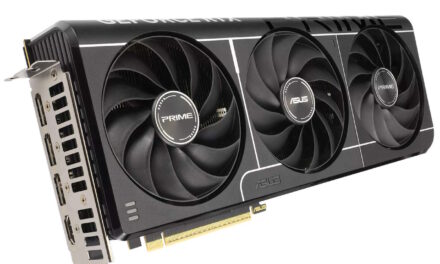
Valar Atomics activated its Ward 250 nuclear microreactor on stage during a live event, where it announced its partnership with Nvidia to power an AI factory. The company shared a portion of the live stream on its LinkedIn account, where one of its team members plugged an Nvidia RTX desktop unit into the reactor, which was then turned up to 37% of its full power to activate the Blackwell-powered PC. The company then showed off the nuclearwebsite.com page, which it says is solely run from a server that’s powered by that reactor. Its CEO, Isiah Taylor, claims that anyone can go to the website as long as the reactor is running.
“The Nvidia chip that Gabriel was just holding on stage is now plugged into a circuit in the OCS. That circuit runs through a cable into the reactor hall. In the reactor hall, 10 to 15th power uranium atoms are fissioning every second, producing 100 kilowatts of thermal energy,” Taylor said on the stage. “That thermal energy is being extracted by our cooling loop, the pressurized helium system, and the hot helium is flowing into a thermal electric generator (TEG). That TEG is creating the electrical current, which is right now powering Nvidia’s Blackwell chip, which is currently serving this website.”
Although the company claims that it’s the first startup to achieve power production, the Department of Energy says that two other firms, Deployable Energy’s Unity and Antares Nuclear’s Mark-0, have also achieved criticality, meaning these players are also on their way in making electricity using small modular reactors. Many AI tech giants and hyperscalers, like Amazon, Google, Microsoft, Nvidia, and Oracle, have invested in nuclear technologies as early as 2024, as they projected that AI data centers would require massive amounts of power.
This has become a major national issue recently, with data centers being blamed for massive increases in power and utility costs, as well as increased water consumption and a reduction in the quality of life in the communities that surround these developments. These problems have caused Americans to push back against these projects, with 7 out of 10 saying that they do not want a data center in their backyard. This resistance has led to the delay or cancellation of at least 75 projects in just the first quarter of 2026.
The public’s pushback and the resulting actions of local and state governments against power- and water-hungry data center projects are forcing both the private and public sectors to innovate. Aside from these SMRs, which will deliver the electricity demands of these data centers and other sites without affecting the national and local grid, Amazon, Microsoft, and Nvidia are also working on technologies that will cut down data center water use by up to 100%.